How to Design the Ultimate Golf-Inspired Backyard
There is a certain kind of golfer who does not entirely leave the game when the round is over. The spikes come off, the glove gets tossed on a table, dinner begins, friends wander in, somebody turns on the grill, and still the mind drifts back to the small pleasures of the day: the clipped sound of a flushed wedge, the soft arrogance of a putt that never left the center, the deep and unreasonable comfort of green space at dusk.
That is the real appeal of a golf-inspired backyard. It is not about building a miniature course for show. It is about creating a place that feels like the best parts of golf itself: calm, social, handsome, practical, and just a little addictive.
The ultimate version has a rhythm to it. Water to cool off in. Fire or food to gather around. A putting surface that turns five spare minutes into an evening ritual. Shade for the hot hours. Seating for the long conversations. Lighting for the afterglow. A few entertainment zones so the yard works just as well for a family cookout as it does for a quiet short-game session at sunset.
Done right, it becomes more than a backyard. It becomes a place people naturally drift toward.
Start With the Flow, Not the Features
The first mistake people make is trying to cram every dream into the same patch of ground. Pool here, grill there, green in the corner, television on the wall, chairs everywhere. What they end up with is not a retreat. It is a traffic jam with landscaping.
A better approach is to think like a course designer. Every great golf space moves the eye and the body naturally from one area to the next. Your backyard should do the same.
Create distinct zones with a clear purpose:
A pool zone for cooling off and relaxing
An outdoor kitchen and dining zone for meals and gatherings
A putting green or practice zone for play
A shaded lounge zone for conversation and recovery
A lighting and entertainment zone that keeps the space useful after dark
These areas do not need walls between them. They need transitions. A change in pavers. A low planter. A path of turf. A pergola. A shift in elevation. The best outdoor spaces feel open, but never random.
The Pool: The Backyard’s Cooling Hazard and Hero
A pool belongs in a golf-inspired backyard for the same reason a halfway house belongs on a hot day: it changes the mood immediately.
After a long summer round, nothing feels more luxurious than stepping into cool water with your shoulders still holding the shape of the swing. A pool also gives the yard movement, reflection, and a visual center of gravity. Even when no one is in it, water makes a space feel alive.
But a pool should not be dropped into the yard as a standalone object. It should be integrated into the larger experience. Place lounge seating nearby. Make sure there is an easy line from the kitchen to the pool deck. Give thought to how wet feet move through the space. Plan for storage. Consider where towels go, where drinks land, where sun becomes shade.
Safety matters here, too. If you are building or updating a pool area, barriers, gates, and lighting are not decorative afterthoughts. They are foundational decisions. Pool-safety guidance consistently emphasizes barriers and controlled access, while landscape-lighting guidance also stresses visibility for steps, walkways, and transitions after dark.
In other words: the pool should feel effortless, because you planned it carefully.
The Outdoor Kitchen: Where Golf Hospitality Lives
Golf has always been about more than swings. It is about the hour after the round, too. The retelling. The exaggeration. The snack that becomes dinner. The one drink that becomes two. A good outdoor kitchen brings that spirit home.
This does not have to mean a full luxury build with every appliance under the sun. It means creating a cooking area that makes hosting easy. A grill, prep space, durable counters, weather-ready materials, smart storage, and enough room for somebody to stand nearby and offer unhelpful commentary.
Placement is everything. The kitchen should sit close enough to the house for convenience, but far enough into the yard that the cook remains part of the action. Outdoor-kitchen planning guides consistently emphasize location, utilities, and material choices as make-or-break decisions for long-term use and durability.
For golfers, the ideal setup usually includes three things:
First, visibility. Whoever is grilling should still be able to see the green, the pool, or the seating area.
Second, seating nearby. Not formal dining only. Stools, benches, a ledge, or a standing rail all help.
Third, a social center. The best outdoor kitchens are not only for cooking. They are for gathering.
The Putting Green: The Soul of the Space
Now we arrive at the heartbeat of the whole yard.
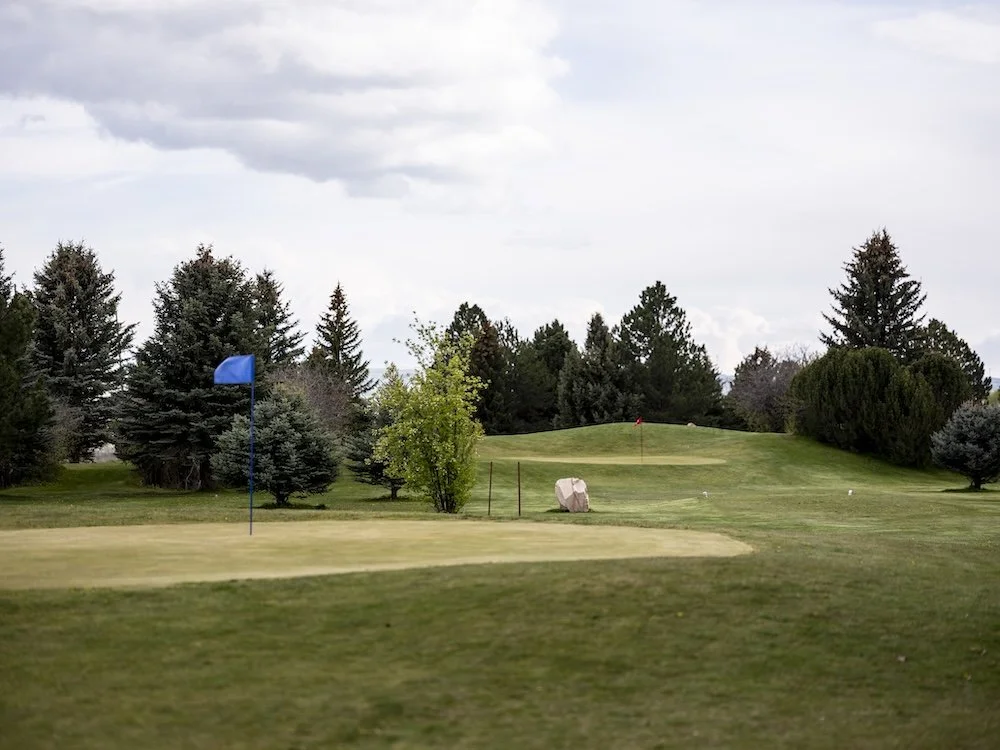
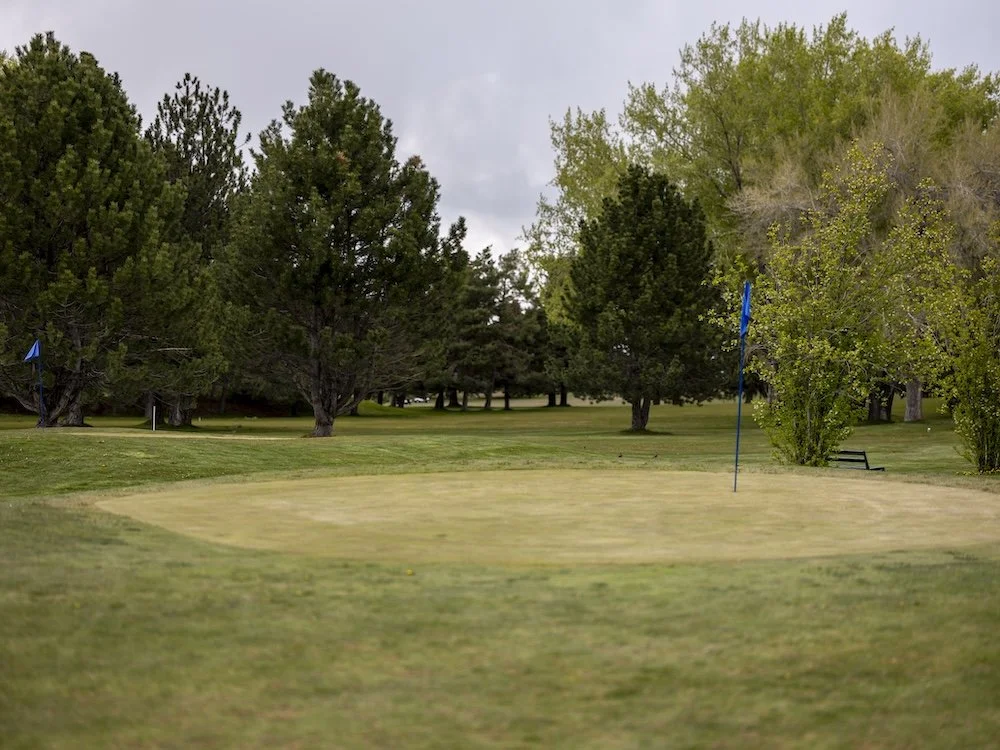
A backyard putting green is the element that turns an attractive outdoor living space into a golf-inspired one. It gives the yard a purpose beyond lounging. It invites repetition, practice, games, wagers, and that quiet kind of attention golfers understand better than most people.
For beginners, a putting green is a low-pressure way to meet the game. No tee time. No dress code. No fear of slowing anyone down. Just a ball, a putter, and the discovery that this maddening little stroke contains an entire universe.
For experienced players, it becomes a laboratory. Pace control. Start lines. Breaking putts. Competitive games with friends. Late-evening maintenance of touch.
If you add a green, do not think only about shape. Think about function. Where will players stand? Is there room for a few short chips? Will balls roll naturally or collect in a bad corner? Does the surface get enough light and airflow? Does water move away properly?
That last point matters more than people realize. Turf guidance from the USGA repeatedly emphasizes drainage, slope, and air movement as critical to putting-green performance and health, whether you are working with natural turf principles or adapting them to a backyard project. USGA construction guidance notes that drain pipes should maintain a minimum continuous slope of 0.5%, and its turf-management resources stress that poor drainage and ponding weaken performance.
If you choose synthetic turf, proper base prep and drainage still matter. Installation guidance consistently points to base preparation, compaction, and drainage as essential for a green that rolls well and lasts.
In plain English: a pretty green is nice. A green that drains, rolls true, and survives the seasons is better.
Shade Structures: The Difference Between Looking Good and Living Well
A backyard can be beautiful and still go unused if there is nowhere comfortable to sit in the heat.
Shade is what turns a visual space into a livable one.
Pergolas, covered patios, slatted roof systems, umbrellas, cabanas, and planted canopy edges all have their place. The right choice depends on your yard, your climate, and how often you actually plan to use the space. But the principle stays the same: every golf-inspired backyard needs a refuge from the sun.
Think about where shade falls in the late afternoon, not just at noon. That is when people are most likely to use the yard. A pergola over a lounge zone or dining table can dramatically increase comfort and extend the number of usable hours in the day. Design guidance from Better Homes & Gardens notes that pergolas can add shade, privacy, comfort, and greater use of patio space.
There is also something deeply golf-like about a shaded sitting area beside a green. It recalls the bench near a practice area, the terrace off a clubhouse, the place where one person putts while another watches and says, “That never moved,” as the ball breaks two cups outside the hole.
Lounge Areas: Give People a Reason to Stay
A backyard without lounge space is a place people pass through. A backyard with thoughtful lounge space is a place people settle into.
This is where the human side of the design comes alive. Deep chairs. Sofas that can handle weather. A pair of chaises near the pool. A quieter corner for coffee in the morning. A more social area near the kitchen. Maybe even a fire feature for cooler evenings.
Do not arrange furniture as though it were a showroom. Arrange it for actual conversation. Angle chairs toward one another. Leave room for side tables. Make it easy for someone to watch the putting green without standing directly on top of it.
The best golf backyards know something many clubhouses know: comfort keeps the evening going.
Lighting: Where the Yard Learns to Breathe at Night
Good outdoor lighting does not scream. It glows.
This may be the most underrated part of the entire design. A yard can look complete by day and unfinished at night if the lighting is poor. The right lighting extends use, improves safety, defines pathways, and creates atmosphere around the pool, the lounge, and the green.
Use a layered approach:
Path lighting for safe movement
Step and transition lighting where grade changes
Accent lighting on landscaping, stonework, or architectural features
Task lighting around the kitchen
Soft ambient lighting around seating zones
Selective feature lighting near the putting green for evening use
Recent outdoor-lighting guidance highlights low-voltage systems as a practical option for homeowners and recommends illuminating paths and steps for both safety and ambiance.
The goal is not a stadium. The goal is a yard that feels welcoming at 8:30 p.m., when dinner is done, the heat has softened, and somebody reaches for a putter just because the light still invites it.
Entertainment Zones: Keep the Yard Useful for More Than Golf
A golf-inspired backyard should honor the game without becoming so specialized that only golfers enjoy it.
That is where entertainment zones matter.
An outdoor television near the lounge can be perfect for tournament weekends. A speaker system can keep the energy easy and relaxed. A dining table gives the yard purpose beyond practice. A fire pit or conversation circle draws in non-golfers who may not care about your lag-putting drill but do care about a comfortable chair and something cold to drink.
The smart move is to make golf one layer of the yard, not the only layer.
That way the space works whether the day calls for short-game games, a family swim, a dinner with friends, or a quiet hour outside with no agenda at all.
Materials Matter More Than Most People Think
The secret to a backyard that ages well is not only design. It is material selection.
Choose surfaces that can handle water, sun, traffic, and routine maintenance. Think about slip resistance near the pool. Heat retention under bare feet. Ease of cleaning around the kitchen. Drainage around the green. Durability under furniture legs and foot traffic.
The most attractive yard in year one is not always the most enjoyable yard in year five.
Golf teaches this lesson, too. Conditions matter. A beautiful thing that does not hold up under use has limited charm.
A Few Smart Additions That Elevate the Whole Experience
Once the major pieces are in place, smaller details begin to matter.
Consider adding:
A ball display or simple storage bench near the green
A beverage fridge in the outdoor kitchen
Towel hooks and concealed storage near the pool
Native or low-maintenance planting to soften the edges
A chipping mat or fringe area if space allows
Wind-resistant planters or screens for privacy
A weatherproof shelf or cabinet for games, scorecards, and speakers
These are not flashy choices. They are the decisions that make the space easier to use, and therefore more likely to be used.
What the Best Golf-Inspired Backyards Really Get Right
In the end, the ultimate golf-inspired backyard is not trying to impress the neighbor peering over the fence. It is trying to make daily life better.
It should feel easy to enter, easy to use, and hard to leave.
It should welcome the first-time golfer who is still learning how to grip a putter and the seasoned player who wants ten minutes of practice before dinner. It should host a barbecue without feeling like a sports facility. It should hold a quiet morning coffee and a lively evening gathering with equal grace.
Most of all, it should carry the spirit of golf without copying the course too literally. Order, beauty, challenge, rest, conversation, repetition, light, and a little mischief. That is enough. That is more than enough.
Because the best golf backyard is not merely a place to work on your game.
It is a place to enjoy the life around it.
FAQs About Designing a Golf-Inspired Backyard
1. What makes a backyard feel golf-inspired without looking overdone?
A golf-inspired backyard usually balances play and relaxation. A putting green, clean lines, clipped turf, thoughtful landscaping, and comfortable seating can evoke the feeling of golf without making the yard feel gimmicky or overly themed.
2. Is a putting green worth adding for beginners?
Yes. A backyard putting green can be one of the most beginner-friendly ways to enjoy golf. It removes pressure, makes practice convenient, and helps new players build feel and confidence around the shortest and most repeated stroke in the game.
3. Should I choose natural grass or synthetic turf for a backyard putting green?
It depends on your goals, climate, maintenance budget, and available sunlight. Natural grass can offer a traditional feel, but synthetic turf often provides lower maintenance and more consistent year-round performance. In either case, drainage and base preparation are critical.
4. How big should a backyard putting green be?
There is no perfect size. A smaller green can still be excellent if it is shaped well and placed thoughtfully. Focus less on size and more on usable space, clean edges, and whether the layout allows for a variety of putts.
5. Does a golf-inspired backyard need a pool?
No. A pool is a luxury feature, not a requirement. It adds a resort-like quality and can make the yard more enjoyable in warm weather, but a golf-inspired backyard can work beautifully with a green, lounge area, kitchen, and shade structure alone.
6. What is the most important design principle for a backyard like this?
Flow. The yard should move naturally from one zone to another. People should be able to walk from the house to the kitchen, pool, lounge, and green without awkward transitions or crowded pathways.
7. Why are shade structures so important in an outdoor golf space?
Shade increases comfort, protects guests from prolonged sun exposure, and makes the yard usable during the hottest part of the day. It also gives visual structure to the space and helps define lounge or dining areas.
8. What kind of lighting works best for a golf-inspired backyard?
Layered lighting tends to work best. Use low-voltage or other outdoor-rated lighting for pathways, steps, kitchen zones, lounge areas, and landscape accents. The goal is to improve safety and atmosphere without flooding the yard with harsh light.
9. How can I make the yard appealing to both golfers and non-golfers?
Build around shared enjoyment. Include lounge seating, dining space, a cooking area, and relaxed entertainment options. Let the golf element be part of the experience, not the entire identity of the yard.
10. What should homeowners think about before installing an outdoor kitchen?
Think about utility access, weather-resistant materials, proximity to the house, storage, prep space, and how the kitchen connects to seating and dining. A well-placed modest kitchen often performs better than a larger setup in the wrong location.
11. Can a small backyard still have a golf-inspired design?
Absolutely. Even a compact yard can include a narrow practice strip, a small putting area, a grill station, and a shaded seating zone. A smaller footprint simply demands more intentional planning.
12. Does a golf-inspired backyard add lifestyle value even if it does not add resale value?
For many homeowners, yes. A well-designed backyard can meaningfully improve how often the space is used, how often people gather there, and how much everyday enjoyment it provides. Lifestyle value is real, even when it is hard to calculate on paper.
External Sources
Recent Writings