How to Learn Golf Step by Step
Golf has a way of humbling everybody.
The first-time player feels it standing over a ball that refuses to look still. The longtime player feels it on a day when a swing that felt reliable yesterday suddenly behaves like a stranger. That is one of the first lessons in golf: the game does not merely ask for effort. It asks for patience, attention, and a willingness to begin again.
That may sound heavy for a sport built around grass, sun, and a white ball no bigger than an egg, but that is part of golf’s hold on people. It is simple enough to start, difficult enough to respect, and deep enough to spend a lifetime learning.
If you want to learn golf step by step, the good news is that there is a clear way in. You do not need to know everything at once. You do not need a perfect swing. You do not need a full bag, a low score, or a fluent command of golf language. You need a starting point, a little structure, and enough humility to laugh when the ball goes forty yards sideways and enough curiosity to try again.
This guide walks through how to learn golf step by step, from your first range session to your first real round and beyond.
1. Start With What Golf Actually Is
Before worrying about swing mechanics, understand the goal of the game.
Golf is about moving the ball from the teeing area into the hole in as few strokes as possible. That sounds obvious, but it helps to remember it when beginners get swallowed by technical advice. The game is not a swing contest. It is not a style contest. It is not even always a power contest. It is a scoring game, a decision-making game, and a self-management game.
That is why golfers of wildly different ages and skill levels can play together and still enjoy the same walk. Golf makes room for ambition, but it also rewards restraint, rhythm, and common sense.
If you are just beginning, learn the shape of the sport first:
A round is usually 9 or 18 holes.
Each hole begins at the tee and ends on the green.
Different clubs are built for different distances and shot types.
Good golf is not just hitting the ball far. It is hitting the right shot often enough to keep moving.
Once you understand that, the game begins to feel less mysterious.
2. Learn the Basic Equipment Without Overbuying
One of the biggest beginner mistakes is thinking you need everything right away.
You do not.
A new player can learn plenty with a small, practical set of clubs: a putter, a wedge, a short iron, a mid-iron, a fairway wood or hybrid, and a driver if desired. Many beginners hit a hybrid more consistently than a long iron, which is one reason hybrids are commonly recommended for newer golfers.
You will also need:
Golf balls
Tees
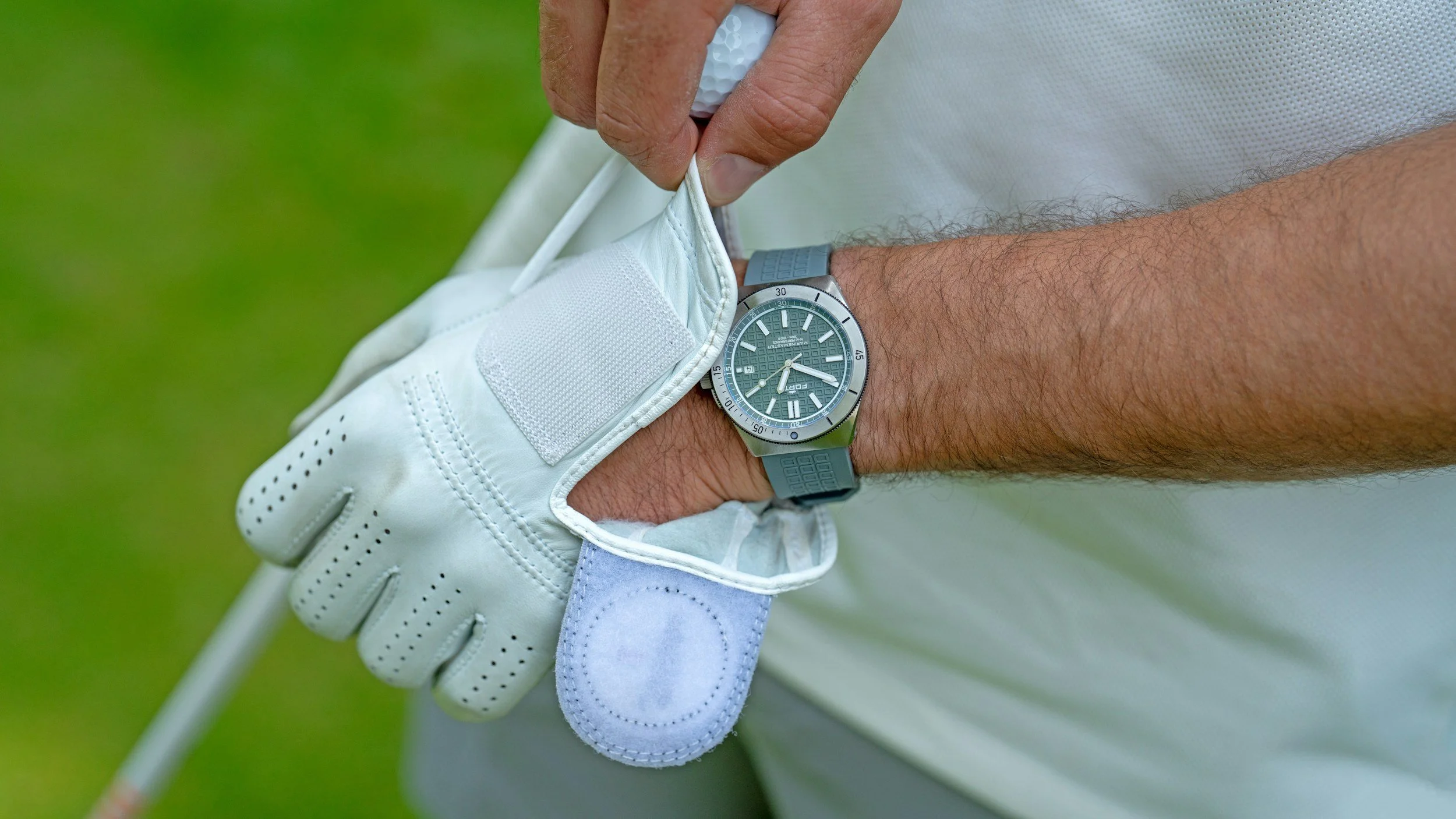
A glove, if you like using one
Comfortable shoes with grip
A ball marker
A divot tool for green care
Keep it simple at first. The best equipment for learning golf is equipment that encourages repetition, not intimidation.
3. Begin at the Green, Not the Tee
This surprises many new players, but one of the smartest ways to learn golf is to begin with the shortest shots.
Start with putting.
Then chipping.
Then short pitch shots.
Only after that should you build toward fuller swings.
There is practical wisdom in this order. Short shots teach contact, rhythm, and clubface control without demanding a full-body athletic motion all at once. They also introduce the part of golf where score is truly made or lost. Many teaching professionals encourage beginners to learn from the green backward because it helps new golfers enjoy early success and understand how shots connect during real play.
When you start at the green, the game becomes less abstract. You begin to see how a hole is finished, and that makes everything farther back make more sense.
4. Build a Simple Grip, Stance, and Posture
Every golf swing begins before the club moves.
A beginner does not need a dozen swing thoughts. A beginner needs a dependable setup.
Focus on these fundamentals:
Grip
Hold the club in a way that feels secure but not strangled. Too much tension makes the swing stiff. Too little makes the club unstable. A neutral grip is often the best starting point because it helps the clubface return more squarely to the ball.
Stance
Set your feet about shoulder-width apart for most full swings. Let your balance feel athletic, not rigid. You should feel ready to move, not frozen in place.
Posture
Bend from the hips, soften the knees, and let your arms hang naturally. Good posture creates room to swing. Poor posture tends to invite compensations.
The beginner’s job is not to make this look elegant. The beginner’s job is to make it repeatable.
5. Learn to Make Solid Contact Before Chasing Distance
There is a particular kind of beginner optimism that believes the driver is the center of golf.
It is not.
The first skill worth owning is contact.
Can you strike the ground in the right place? Can you brush the turf after the ball with an iron? Can you make a controlled half-swing that sends the ball into the air with some sense of order?
Distance will come later. Contact comes first.
A player who can hit a short club solidly has begun to learn golf. A player who swings wildly in search of miracle yardage is still bargaining with the game.
That is why practice sessions should begin with smooth, controlled swings. Half-swings and three-quarter swings are useful. They help develop balance, sequence, and centered contact without the chaos of trying to hit every shot as hard as possible.
6. Use the Driving Range the Right Way
A driving range can either speed up your learning or bury it.
The difference is intention.
Do not simply rake ball after ball into position and swing until your body forgets what it is doing. Practice with a purpose.
A productive range session for a beginner might look like this:
Start with short putts or chips, if the facility allows.
Move to wedge shots with a small, controlled swing.
Hit short and mid-irons with a focus on balance and contact.
Finish with a few longer clubs.
End on a club you like, not the one that annoyed you most.
Take breaks between shots. Pick a target. Go through some version of a pre-shot routine. Learn to aim. Learn to reset. Golf on the course is one shot at a time, not a blur of fifty consecutive swings.
7. Take a Lesson Earlier Than You Think
Many beginners wait too long to get help.
A lesson does not need to be formal, intense, or ongoing forever. Even one good session early can keep a new player from rehearsing the wrong motions for months. Instruction is especially useful for grip, posture, ball position, and basic movement patterns, because those fundamentals influence nearly everything that follows. Beginner-oriented coaching and group instruction are widely recommended as effective entry points into the game.
If lessons are available to you, take one. Not because golf requires perfection, but because a little clarity early tends to save a lot of frustration later.
8. Learn the Short Game as Its Own World
New golfers often treat the short game like a waiting room for full swings.
That is backwards.
The short game is not a side topic. It is the scoring heart of golf.
Learn:
How to putt with steady tempo
How to chip with simple technique
How to judge distance around the green
How to use different clubs for different roll-out
How to escape basic bunkers, if possible
Even advanced players revisit these skills constantly. The reason is plain: the closer you are to the hole, the more every stroke matters.
A player who learns to putt and chip with calm intention often becomes a better full-swing player too, because confidence has a way of traveling upward through the bag.
9. Understand Basic Rules and Golf Etiquette
You do not need to memorize the full Rules of Golf before you begin, but you should know the basics.
At minimum, learn:
When a ball is out of bounds
Basic penalty concepts
Where to stand when others hit
When it is your turn
How to mark and lift a ball on the green
How to care for the course by repairing ball marks, replacing divots when appropriate, and raking bunkers after use
Golf etiquette matters because it keeps the game playable and enjoyable for everyone. The governing bodies of the game emphasize both rules knowledge and pace of play, and course-care guidance consistently reminds golfers to leave the course in better condition than they found it.
A golfer does not need to be good to be welcome. But it helps to be aware, ready, and considerate.
10. Play Shorter Rounds Before Full Rounds
A beginner does not need to march straight into 18 holes.
In fact, that can be too much.
Start smaller:
Practice areas
Par-3 courses
Short 9-hole rounds
Casual evening rounds
Beginner-friendly teeing areas
This helps you learn the rhythm of actual play without turning your first golf experience into a five-hour examination. Shorter formats also reduce pressure and make it easier to stay engaged.
The best early goal is not to “shoot a score.” It is to learn how a round feels.
11. Choose the Right Tees and Make the Game Playable
Pride has ruined many first rounds.
Play from a forward, sensible teeing area. There is no trophy for making the game unnecessarily long. One of the easiest ways to improve pace of play and enjoyment is to match the course length to your current ability. Pace-of-play guidance from golf’s governing bodies repeatedly points to player behavior and appropriate setup as part of a better experience for everyone.
Good golfers understand this. Learning golfers should too.
When the course is scaled to your game, you get more chances to hit meaningful shots, finish holes, and stay interested.
12. Expect Bad Shots and Keep Moving
This is not a small point. It may be the central point.
You are going to hit poor shots.
You are going to top one, chunk one, blade one, slice one, and miss a putt that looked impossible to miss. This is not evidence that golf is not for you. This is golf introducing itself properly.
Improvement in golf is not linear. It comes in flickers. A cleaner strike. A well-judged chip. A putt that starts on line. A hole where the parts briefly agree with each other. That is how the game teaches you to stay.
The player who learns fastest is often the one who wastes the least emotional energy on the last shot.
13. Practice With a Plan, Not Just Hope
If you want to improve steadily, divide your practice.
A good beginner practice week might include:
One session on putting
One session on chipping and pitching
One range session for full swings
One short on-course round, if possible
That structure matters because golf improvement is rarely about one dramatic breakthrough. It is usually about repeated contact with the same fundamentals until they begin to feel less borrowed.
Keep notes if you like. Notice patterns. Which miss shows up most? Which club feels least intimidating? Which distance gives you trouble? Golf is generous to players who pay attention.
14. Develop a Simple Pre-Shot Routine
A pre-shot routine is one of the first habits that helps a golfer look and feel more settled.
It does not need to be elaborate.
Try this:
Stand behind the ball and pick a target
Take one practice swing, if useful
Step in
Set the clubface
Set your feet
Breathe
Swing
The routine matters because it creates consistency under uncertainty. Golf gives you endless reasons to rush, especially when nerves appear. A routine is how you stay connected to something familiar.
15. Learn Course Management Early
Even beginners benefit from strategy.
Course management simply means choosing the shot you are most likely to pull off, not the shot that would look best if everything went perfectly.
That means:
Taking enough club
Aiming away from obvious trouble
Chipping out when recovery is unlikely
Choosing the safer side of the green
Accepting bogey instead of forcing double or triple
Experienced golfers know this. New golfers should hear it sooner. Golf often rewards restraint more than heroism.
16. Get Comfortable With Golf’s Social Side
Golf is a game, but it is also a shared environment.
Part of learning golf is learning how to move among other golfers:
Be ready when it is your turn
Watch where everyone’s ball goes
Stay quiet during swings
Keep up with the group ahead
Offer encouragement, not commentary
Do not apologize for every poor shot
You do not need to be polished. You just need to be thoughtful.
One of the lovely things about golf is that the community usually has room for people who are trying.
17. Track Progress the Right Way
Beginners often measure improvement only by score.
That is too narrow.
Better signs of growth include:
More solid contact
Fewer complete mishits
Better distance control on putts
More confidence with one or two clubs
Finishing holes without unraveling
Recovering emotionally faster after mistakes
Understanding where to stand, what to do, and how to keep pace
These are real milestones. Score will matter later. At first, learn to recognize progress before the card fully reflects it.
18. Know When to Upgrade Your Goals
At some point, the game changes.
You stop trying merely to survive the round and begin trying to shape it.
That is when you can start building more advanced habits:
Gapping your clubs
Tracking fairways and greens
Practicing from uneven lies
Learning trajectory control
Studying wedge distances
Understanding spin and rollout
Building a consistent warm-up
The important thing is not to rush there. The advanced side of golf will still be waiting. It always is.
19. Keep the Game Fun Enough to Continue
This deserves its own section because many promising golfers leave the game not from lack of ability, but from an overdose of pressure.
Golf should challenge you, but it should also keep calling you back.
That can mean:
Playing with kind people
Walking when possible
Practicing short game more than pounding drivers
Setting small goals
Laughing at the absurd moments
Ending a session before frustration takes over
The healthiest golf habit is not obsession. It is return.
Come back to it. Let the game unfold slowly. That is how many golfers learn to love it.
20. The Real Step-by-Step Way to Learn Golf
If you want the simplest version, it looks like this:
Learn the purpose and flow of the game.
Get a basic set of clubs, not an extravagant one.
Start with putting and chipping.
Build grip, stance, and posture.
Learn contact before distance.
Practice on purpose at the range.
Take a lesson if you can.
Learn basic rules and etiquette.
Play short rounds from sensible tees.
Expect mistakes and keep going.
Practice the short game often.
Add strategy and routine as you improve.
That is how to learn golf step by step.
Not all at once. Not perfectly. Just honestly.
Because in the end, golf is not mastered by force. It is learned by accumulation. A strike here. A putt there. A round that felt less confusing than the last one. A morning when the game gives you one clean shot and, with it, enough hope to return tomorrow.
And for many golfers, that is how it begins for real: not with mastery, but with one shot that feels like a door opening.
FAQs About Learning Golf Step by Step
1. What is the best way to start learning golf?
The best way to start learning golf is to begin with the basics: understanding the purpose of the game, learning simple setup fundamentals, and practicing putting and chipping before moving into full swings. Starting small helps beginners build confidence and develop feel without becoming overwhelmed.
2. Should beginners start with the driver?
Usually, no. Most beginners learn faster by starting with putting, chipping, and shorter clubs. The driver can be fun, but it is often harder to control. Learning solid contact first creates a better foundation for every club in the bag.
3. How many clubs does a beginner need?
A beginner does not need a full set right away. A practical starting setup might include a putter, wedge, short iron, mid-iron, hybrid or fairway wood, and optionally a driver. A smaller set makes learning simpler and less intimidating.
4. Is golf hard to learn?
Golf is easy to begin and difficult to master. That is part of its appeal. A new golfer can learn the basics fairly quickly, but consistency takes time. Improvement usually comes through steady repetition, patience, and realistic expectations.
5. How often should I practice golf as a beginner?
Consistency matters more than volume. Two to four focused sessions per week can be enough to build momentum. A balanced routine with putting, short game, full swings, and occasional on-course play usually works better than hitting a large bucket of balls once in a while with no plan.
6. Should I take golf lessons as a beginner?
Yes, if lessons are accessible to you, they can help a great deal. Even one beginner-friendly lesson can improve grip, posture, ball position, and basic swing motion. Early guidance often prevents bad habits from becoming harder to fix later.
7. What are the most important golf skills for beginners?
The most important early skills are grip, posture, stance, contact, putting, chipping, and basic etiquette. New golfers also benefit from learning pace of play, course care, and simple course management.
8. How long does it take to get decent at golf?
That depends on how often you practice and what “decent” means to you. Many golfers see meaningful progress within a few months of regular practice. Solid contact, improved short game, and comfort on the course often come before low scores.
9. What should I practice first in golf?
Practice putting and chipping first. Those shots teach touch, rhythm, and clubface awareness, and they help beginners understand how holes are actually finished. From there, move into short irons and gradually longer clubs.
10. What golf rules should beginners know first?
Beginners should first learn basic penalty concepts, out-of-bounds, safety and etiquette, when and how to mark a ball on the green, and how to care for the course. You do not need to memorize the full rule book at the start, but learning the common situations makes play smoother and more enjoyable.
11. Is it better to play 9 holes or 18 holes as a beginner?
For many beginners, 9 holes is the better place to start. It is less tiring, less time-consuming, and often less overwhelming. Shorter rounds make it easier to learn the rhythm of golf without losing focus or confidence.
12. How do I get better at golf without getting frustrated?
Set small goals, practice with structure, celebrate small improvements, and expect poor shots along the way. Golf becomes far more enjoyable when you stop demanding perfection and start noticing progress in contact, confidence, and decision-making.
External Sources
Recent Writings