Common Golf Questions, Answered: A Straightforward Guide for New Players and Lifelong Golfers
Golf is generous that way. It lets a beginner belong on day one, even while making it clear there will be mysteries to solve for years. You can stand on the first tee with a borrowed bag, two sleeves of balls, and no real idea what a handicap is, and still feel the pull of the game. You can also play for decades and still find yourself asking the same old questions in new disguises: Where do I drop this? Why did that drive curve so much? How many clubs am I actually allowed to carry? What, exactly, is the right thing to do here?
That is one of golf’s quiet truths. It is simple enough to begin and deep enough to keep you occupied for a lifetime. The beginner wants clarity. The experienced player wants refinement. Both are really asking for the same thing: a little more confidence the next time the ball is in the air, in the rough, on the cart path, or under the sort of pressure that makes a three-footer feel like a public act of faith.
This guide answers many of the most common golf questions in one place, with an eye toward what actually helps: how to start, what equipment matters, what golfers should know about etiquette, what the most common rules situations look like, and how to get more enjoyment out of the game without making it harder than it already is.
Why golfers ask so many questions
Because golf asks so much back.
It asks for patience before reward, composure before competence, and honesty even when nobody is watching. There are games with clearer edges and simpler objectives. Golf is not one of them. It has equipment questions, swing questions, scoring questions, etiquette questions, and rules questions that arrive at inconvenient times. The good news is that most of the questions golfers ask are not exotic. They are practical. They happen all the time. And once you understand them, the game opens up.
What do you need to start playing golf?
Less than most beginners think.
To get started, you need a playable set of clubs, a few golf balls, tees, a bag, shoes that provide traction, and clothing that lets you move comfortably and fits the expectations of the facility where you are playing. You do not need the most expensive gear, the latest release, or a perfectly built 14-club setup. In fact, many beginners are better off starting smaller and simpler, then adding pieces as their game becomes more defined. The rules allow up to 14 clubs, but you do not have to carry 14.
For many new golfers, a practical starter setup looks something like this:
Driver or fairway wood
A few mid-irons or hybrids
Pitching wedge or sand wedge
Putter
That is enough to learn the shape of the game. Enough to play holes, to miss greens, to chip badly and then beautifully, to discover that putting is either the easiest thing in the world or the hardest, sometimes within five minutes of each other. A smaller set can make club selection easier and reduce the feeling that you are carrying a toolbox before you know what any of the tools do.
Related: Golf Swing Basics: A Better Motion Starts Before the Club Ever Moves
How many clubs can you carry in golf?
The maximum is 14 clubs. That is one of the most basic rules questions in the game, and one of the easiest to remember. But the more useful point for most golfers is this: a full bag is optional, not mandatory. New players often do better with fewer clubs and clearer decisions. Seasoned players sometimes do better that way, too, though they are less likely to admit it.
What clubs do beginners really need?
Beginners do not need a perfect composition. They need forgiveness, simplicity, and enough loft to get the ball in the air. That usually means clubs that are easier to launch and easier to hit from imperfect lies. Hybrids often help. A dependable wedge matters. A putter that feels stable matters more than one that looks expensive. Most golfers lower their stress before they lower their scores, and smart equipment choices can help with that.
What should you wear golfing?
Wear clothes that allow movement, suit the weather, and respect the setting. Breathable shirts, comfortable shorts or pants, and shoes with traction are a sensible baseline. A hat, sunscreen, and layers matter more than fashion arguments. Golf is long enough without being uncomfortable in hour two.
What is a proper golf stance?
A good stance is less about posing and more about balance. Most golfers need a stable base, slight knee flex, a bend from the hips rather than the waist, and arms that can hang naturally. If the setup feels strained, the swing usually follows it there. A balanced stance gives you your best chance to return the club to the ball with something like order. That does not guarantee a good shot. It simply gives the shot a fighting chance.
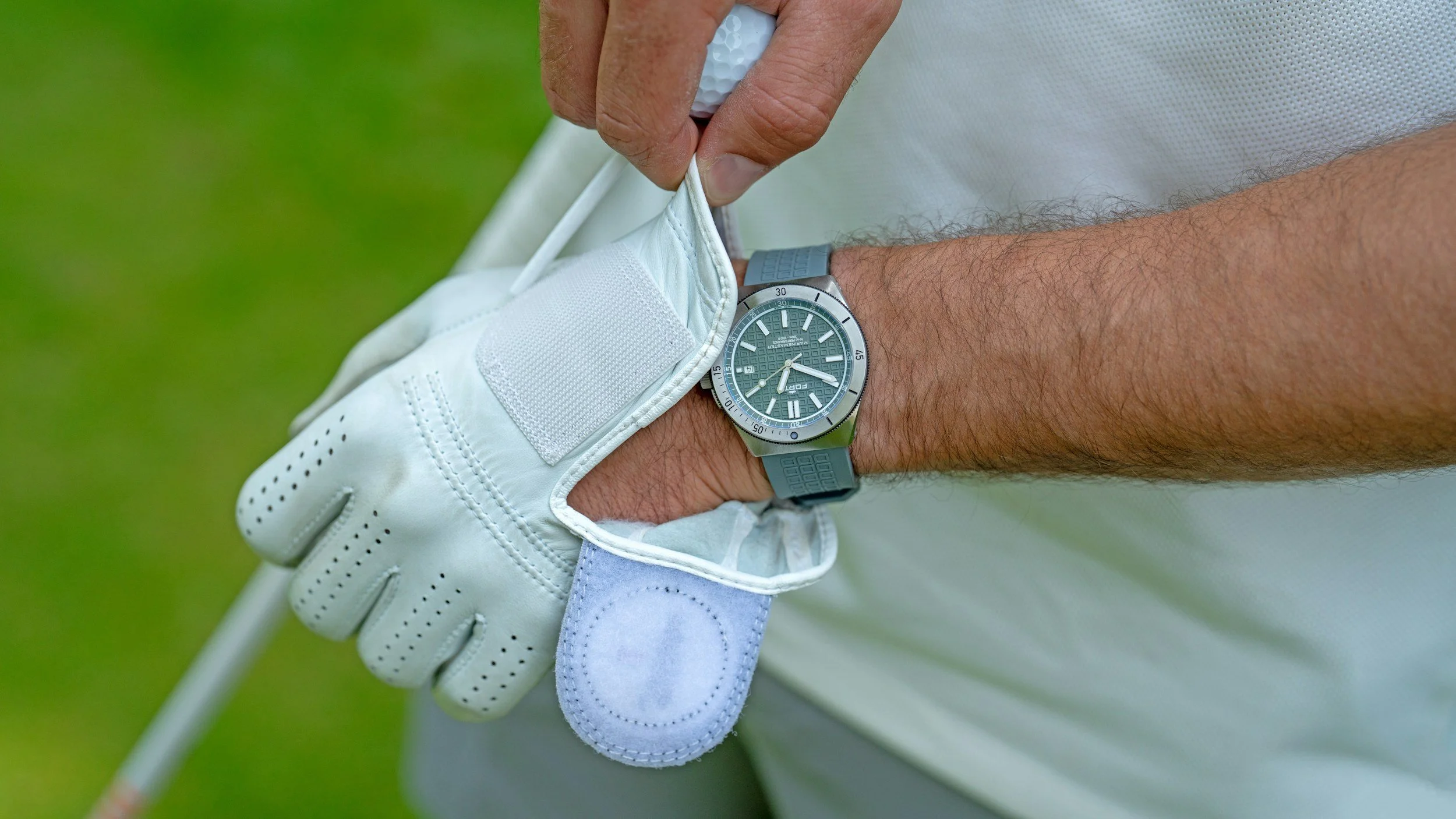
Why do golfers use only one glove?
Because most golfers wear a glove on the lead hand to improve grip and reduce slipping, especially in heat, humidity, or rain. The glove is there for control, not ceremony. Many players remove it for putting and short shots to get a little more feel. Others leave it on. Golf allows for plenty of harmless rituals, and this is one of them. The bigger point is that grip security matters.
What do golfers use to mark the ball on the green?
Usually a small coin or a purpose-made ball marker, though golfers sometimes use a tee or other small object. The custom is simple: mark the ball, lift it if needed, clean it if you like, and replace it carefully. The marker does not need to be fancy. It just needs to be small, respectful of other players’ lines, and easy to move if someone asks.
How far do you walk in a round of golf?
A round can involve several miles of walking, depending on the course layout and whether you walk or ride. That is part of what makes golf more physically meaningful than its reputation suggests. Even when it feels leisurely, golf often asks for time on your feet, balance over uneven ground, repeated rotation, and sustained concentration over several hours. Many golfers underestimate the physical load because the game does not announce itself as exercise in the way running or training does. It just accumulates.
How many calories does a round of golf burn?
It varies by pace, terrain, weather, walking versus riding, and how much gear you carry. But it is fair to say a full round can represent meaningful physical activity, especially when walking. What matters for most golfers is not the exact number. It is the broader truth that golf asks for endurance, coordination, and repeated movement over time. That matters for performance, recovery, and how you feel late in the round.
Do you need to be fit to play golf?
No. But basic fitness helps. You do not need elite athleticism to enjoy golf, improve, or play regularly. You do benefit from mobility, balance, and enough stamina to swing with some freedom on the closing holes, not just the opening ones. A game that looks gentle from the parking lot can become demanding by the back nine. Many golfers learn that their body enters the conversation long before their scorecard says so.
Related: Beginner Golf Equipment Guide: What You Actually Need and How to Build a Smart Bag
What golf etiquette matters most?
Not the fussy kind. The useful kind.
Be ready when it is your turn. Stay aware of where others are. Do not talk or move in someone’s line of sight during a shot. Do not walk through another player’s putting line. Repair ball marks on the green. Rake bunkers if required. Keep pace. And perhaps most importantly, manage yourself. The game is hard enough without turning a bad hole into a public performance. Good etiquette is not about pretending to be polished. It is about making the round better for everyone.
Experienced golfers know this, but it bears repeating: people remember how you play with them as much as how you play. Few things are more welcome than a steady partner who keeps moving, keeps perspective, and knows when to laugh.
Why do golfers hit good drives off the toe sometimes?
Because mishits are not all created equal. Off-center contact changes spin and ball flight, and in some cases a toe strike can reduce the look of a player’s usual slice because of how the clubhead and ball interact at impact. That does not make toe contact ideal. It just explains why a bad-feeling strike can occasionally produce a surprisingly playable result. Golf is full of these little insults to certainty.
Why does the short game or putting vanish when the full swing shows up, and vice versa?
Because golf is played by humans, not machines. Players often operate within a familiar scoring range, and when one part of the game suddenly outperforms expectation, tension can show up elsewhere. Some of it is technical. Some of it is emotional. Much of it comes back to routine, pace, and attention. The solution is rarely mystical. It usually lives in steadier preparation and a more repeatable pre-shot process.
What are the golf rules questions players ask most often?
Most rules confusion does not come from obscure situations. It comes from ordinary ones.
The most common questions often involve free relief from a cart path, options for balls in penalty areas, and what to do when something unexpected affects the ball in motion or at rest. These are not niche curiosities. They are the daily traffic of the game. The governing bodies receive a large volume of rules questions each year, and these same situations rise again and again because they happen to everyone.
How do you take relief from a cart path?
If a cart path interferes with your lie, stance, or intended swing, free relief is generally taken by finding the nearest point of complete relief, no nearer the hole, where the path no longer interferes. From there, you drop within one club-length of that point, again not nearer the hole, and the relief area must be in bounds and not in a bunker, penalty area, or on the putting green. This is one of the most frequently asked rules questions for a reason: the concept sounds simple until you are standing there trying to picture it.
What are your options for a ball in a penalty area?
For a yellow penalty area, the standard one-stroke relief options are stroke-and-distance or back-on-the-line relief. For a red penalty area, those two options also apply, plus lateral relief within two club-lengths of where the ball last crossed the edge of the penalty area, no nearer the hole. This is a spot where golfers often confuse color with severity. The better way to think about it is that color affects which relief options are available.
What should golfers remember about common rules situations?
Slow down. Identify the reference point correctly. Know whether the relief is free or penalized. Know whether you are measuring one club-length or two. And make sure you understand where the ball last crossed a penalty area, because that detail controls much of what happens next. Golf rules often feel harder than they are because players try to solve them too quickly, usually while annoyed.
How do you get a golf handicap?
The broad idea is simple: a handicap is a scoring measure designed to help golfers of different abilities compete on fairer terms. To get one, golfers typically submit acceptable scores through an authorized handicap system. The exact administrative steps vary by club or region, but the purpose remains the same: to turn scoring history into a useful index of playing ability. For beginners, a handicap can make the game feel more navigable. For experienced players, it becomes a familiar mirror, flattering on some days, unkind on others.
How can beginners improve faster without getting overwhelmed?
Start with contact, not complexity.
Learn how to set up to the ball. Learn how far a few clubs actually go for you, not for someone on a screen. Spend time on putting and chipping, because that is where confidence can be built quickly. Play from sensible yardages. Ask simple questions. Keep fewer swing thoughts. Respect pace of play. And understand that progress in golf rarely arrives in a straight line. You do not graduate from confusion. You become more comfortable inside it.
How can experienced golfers keep learning?
By resisting the fantasy that they are finished learning.
The longer you play, the more the game turns from information to discernment. Not what a rule says, but when it applies. Not whether a shot exists, but whether it is wise. Not whether you can hit a club, but whether you should. The common questions stay common because golf keeps returning us to first principles: balance, decision-making, honesty, patience, and enough humility to ask again.
The real answer to most golf questions
Most golf questions have a technical answer and a human one.
The technical answer tells you how many clubs you can carry, where to drop from a cart path, what counts as proper relief, and what the etiquette requires. The human answer is that golf gets better when you know enough to move through it without panic. When you are not guessing all the time. When the game stops feeling like a test you forgot to study for and starts feeling like what it is: a walk, a puzzle, a wager with yourself, a long conversation between expectation and acceptance.
And that may be why the questions matter so much. Every clear answer removes a little fog. Every little bit of understanding makes room for more enjoyment. That is true for the person playing their first round and for the golfer who has been doing this for forty years and still cannot quite believe how a game can be so maddening, so revealing, and so worth returning to.
FAQs About Common Golf Questions
1. What is the most important thing a beginner golfer should learn first?
A balanced setup, basic contact, and simple on-course etiquette. Fancy mechanics can wait. A golfer who can get the ball in play, keep moving, and feel comfortable on the course will improve faster than one buried in technical overload.
2. Do you need 14 clubs to play golf?
No. Fourteen is the maximum allowed, not the requirement. Many beginners play better with fewer clubs while they learn distances and build confidence.
3. What is the easiest way to remember golf etiquette?
Think awareness and pace. Be ready, be quiet when others hit, take care of the course, and do not hold up the group.
4. What do you do if your ball is on a cart path?
If the cart path interferes with your lie, stance, or intended swing, you generally find the nearest point of complete relief and drop within one club-length, no nearer the hole, subject to the proper relief-area conditions.
5. What is the difference between a red and yellow penalty area?
A yellow penalty area offers stroke-and-distance and back-on-the-line relief. A red penalty area offers those options plus lateral relief within two club-lengths, no nearer the hole.
6. Why do some bad golf shots still work out fine?
Because impact location and spin matter. A mishit can produce a result that looks better than it felt, especially with the driver. Golf does not always reward sensation with truth.
7. Is golf good exercise?
It can be, especially when walking. A round often involves several miles on foot, hours of movement, repeated swings, and steady concentration.
8. When should a golfer start keeping a handicap?
Whenever they are submitting acceptable scores consistently and want a clearer measure of progress or a fairer way to compete. It is useful for both new and experienced players.
9. What clubs should a true beginner buy first?
A simple, forgiving setup: a wood or hybrid, a few irons or hybrids, a wedge, and a putter. Start with enough clubs to play, not enough to impress.
10. Why do golfers keep asking the same questions year after year?
Because golf keeps presenting the same situations under slightly different pressure. Rules, etiquette, equipment, and ball flight never stop being relevant. The game changes as you change.
External Sources
USGA, “We Answer the Most Common Rules Questions of the Year.”
Golf Monthly, “54 Common Golf Questions You Asked Google... Answered.”
GOLF.com, “11 questions from everyday golfers, answered.”
Stix Golf, “100 Beginner Golfer Questions – Answered.”
Recent Writings