Beginner’s Guide to Golf: How to Start, Improve, and Enjoy the Game for Life
Golf can look complicated from the outside. There are the clubs, the scorecards, the rules, the rituals, the quiet, the sudden noise of a clean strike. It can seem like a game built by insiders for insiders. Then you step onto the grass, make one decent swing, watch the ball climb into the air, and the whole thing begins to make sense.
That is the first truth of golf: it is difficult, yes, but it is not closed. It welcomes beginners, frustrates experts, humbles both, and offers each of them the same bargain. Show up. Pay attention. Keep going.
For the new player, golf is best approached as a series of simple understandings rather than a mountain of technique. For the experienced player, those same basics remain the scaffolding of better golf. Grip. Setup. Contact. Distance control. Patience. Tempo. Etiquette. Course management. The game keeps changing, but the essentials remain loyal.
What Golf Is, Really
Golf is a target game. The goal is to move the ball from the teeing area into the hole in as few strokes as possible. That sounds plain enough, but the beauty of the game lies in how many different ways there are to solve that problem. One player leans on power. Another survives on touch. One trusts a high draw. Another plays a low fade and putts the lights out. There is room for all of it.
If you are new, this matters. You do not need to look like anyone else to become a golfer. You need a playable motion, a little understanding, and enough patience to let improvement arrive in layers. Even for skilled players, the game tends to reward repeatability over flash.
The Best Way to Start Golf
A lot of beginners think they should wait until they know more before they begin. Usually the opposite is true. The game starts making sense once you are around it. Go to a range. Spend time on a putting green. Play a short course if one is available. Hit half-shots before full shots. Learn the feeling of the club moving through space before you bury yourself in swing positions. That beginner-first, motion-first approach is echoed across instruction content aimed at new golfers.
A smart first progression looks like this:
Start on the putting green, where you learn how the ball rolls and how the face controls direction. Move to short chips and pitches, where you begin to understand contact. Then hit short irons on the range. Only later should you chase a full driver swing. Players who begin with the short game usually gain confidence faster, because the shorter motion is easier to repeat and the feedback is clearer.
Related: Beginner’s Guide to Golf: How to Practice Smarter, and Find Purpose in Each Game
The Basic Equipment You Actually Need
A beginner does not need a tour van’s worth of equipment. A sensible starter setup can be modest. Many beginner guides recommend beginning with fewer clubs, not more, and building around clubs that are easier to launch and control. A practical starting mix is a driver or fairway wood, a hybrid, a few mid- to short-irons, a wedge, and a putter. The Rules of Golf allow up to 14 clubs, but beginners do not need to carry all 14 to learn and enjoy the game.
It also helps to have:
golf balls you do not mind losing
tees
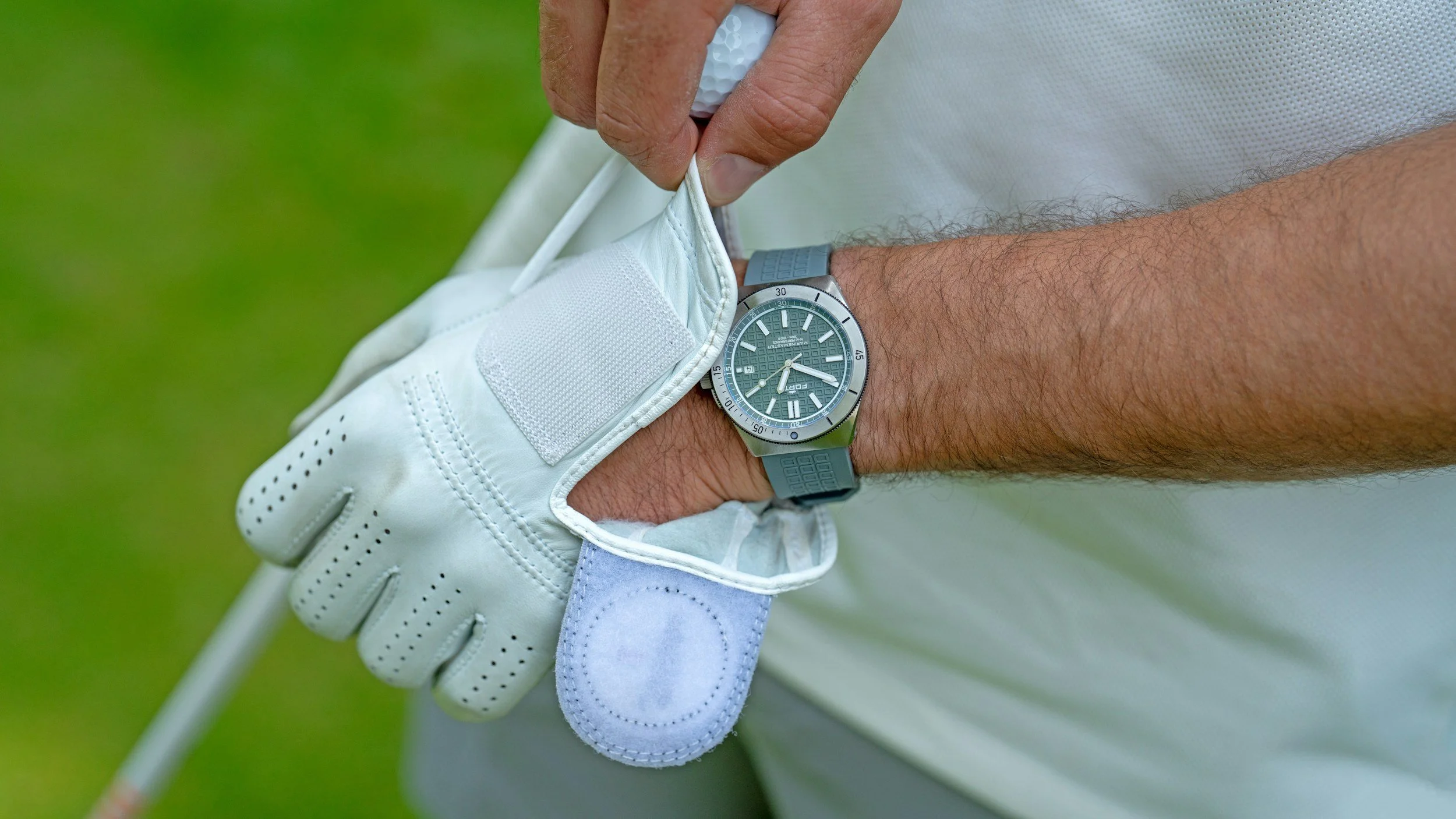
a glove if it improves comfort and grip
a towel for keeping clubs and ball clean
a bag that is light enough to carry or easy to load on a cart
The deeper point is this: do not let gear become a barrier. Good golf has been played with all kinds of clubs by all kinds of players. At the beginning, forgiveness, comfort, and consistency matter more than prestige.
Understanding the Main Types of Golf Clubs
The clubs in the bag are not there to impress anyone. They are tools for different jobs.
The driver is usually used from the tee on longer holes and is built for distance. Fairway woods and hybrids are often easier for beginners than long irons because they can help launch the ball higher. Irons are used for a wide range of shots into the fairway and toward the green. Wedges handle shorter approach shots, chips, pitches, and bunker play. The putter is for rolling the ball on the green. That basic structure is consistent across modern beginner instruction.
A simple rule for newer golfers: use the club that gives you the best chance of decent contact, not the one you think you are supposed to hit.
Golf Grip, Stance, and Setup
Every golf swing starts before the club moves.
Your grip should be secure enough to control the club but relaxed enough to allow speed. Your stance should feel athletic, balanced, and stable. Your posture should come from bending at the hips rather than slouching from the shoulders. Your alignment should be parallel to the target line, with feet, hips, and shoulders aimed together. These setup fundamentals show up again and again because they influence almost everything that follows.
For beginners, the best advice is not ornate. Stand in balance. Hold the club without strangling it. Aim your body consistently. Let the swing be a turn through the ball, not a slap at it.
Experienced players know this, too: when the game begins to wobble, setup is often the first place worth checking.
How to Swing a Golf Club Without Overthinking It
The golf swing can be made to sound terribly crowded. But for most players, especially early on, it helps to think of it in broad shapes.
The backswing is a turn away from the target. The downswing is a return through the ball with balance and sequence. The finish is a pose you can hold without stumbling. Instruction for beginners consistently emphasizes smooth motion, balance, and solid contact over raw speed.
A few useful ideas:
Keep your tempo steady.
Let your body turn instead of lifting the club only with your hands.
Swing through the ball rather than trying to stab at it.
Finish in balance.
That last one matters. A balanced finish is one of the clearest signs that the swing had rhythm, not panic.
Why Beginners Should Focus on Contact, Not Power
One of golf’s old seductions is the notion that harder must mean better. It does not. New players often improve faster when they aim for center-face contact and directional control rather than distance. Solid contact with a shorter, smoother swing will usually beat a violent lash that produces two good shots out of ten. Many beginner resources make this exact point: consistency first, power later.
The seasoned player knows a version of this truth as well. Distance is useful. Predictability is priceless.
Where to Practice First
The range is useful, but it is not the whole game. A good practice routine includes the putting green, chipping area, and short-iron work before long-club heroics. Beginner instruction from teaching and equipment sources alike points toward structured practice rather than bucket-beating. Set one or two goals. Use alignment aids. Take breaks. Pay attention to quality over quantity.
A better first practice session might look like this:
Putt for fifteen minutes.
Chip for fifteen minutes.
Hit half-swings with a wedge or short iron.
Then hit a few fuller shots with a mid-iron.
Only after that, if you still feel composed, reach for something longer.
That sequence teaches the game from the hole backward, which is often the fastest route to real competence.
Related: Common Golf Injuries: What Golfers Need to Know to Stay Healthy and Keep Playing
Golf Rules Every Beginner Should Know
You do not need to memorize the rule book before your first round, but you should know the shape of the game.
A foundational principle in golf is to play the course as you find it and play the ball as it lies. A hole starts in the teeing area and ends when the ball is holed. Players are expected to follow the Rules and act in the spirit of the game. Those core ideas are emphasized by governing bodies and beginner education materials alike.
A few beginner-friendly essentials:
Count every stroke.
Do not improve your lie unless a Rule allows relief.
Learn basic penalty situations slowly, over time.
When in doubt in a casual round, keep the game moving and sort out the finer points later.
Golf has rules, yes, but it also has rhythm. Beginners do best when they learn the rules in practical chunks.
Golf Etiquette Matters More Than a Perfect Swing
Here is a useful secret: other golfers will forgive a bad swing long before they forgive bad etiquette.
Be ready when it is your turn. Stay quiet and still when someone is hitting. Stand in a safe place. Repair ball marks, replace divots when appropriate, rake bunkers if required by local practice, and keep pace with the group ahead. Pace of play is not some side issue. It is part of being a good playing partner, and governing bodies have published extensive guidance encouraging players to avoid unreasonable delay and adopt efficient habits.
The lovely thing about etiquette is that it lets a beginner belong immediately. You may not know how to hit every shot, but you can always be considerate.
What to Expect During Your First Round
Your first round is not a final exam. It is an introduction.
Arrive early enough to breathe. Check in. Stretch. Hit a few putts. Maybe hit a small bucket, but not enough to tire yourself out. Bring extra balls. Choose the easier club when you are uncertain. Move forward from trouble. Pick the ball up if a hole gets sideways. The point is to learn the flow of the course and leave wanting to come back. Advice aimed at first-time golfers consistently recommends arriving early, warming up, and keeping expectations sane.
A first round rarely looks elegant. That is fine. Golf is not asking for elegance yet. It is asking for curiosity.
Common Beginner Golf Mistakes
Most new golfers make the same noble errors.
They swing too hard.
They practice only the driver.
They ignore setup.
They chase too many swing thoughts.
They use clubs that are too difficult too soon.
They judge progress by one shot instead of a pattern.
They forget that golf improvement is usually uneven.
The fix is not glamourous. Simpler setup. Smaller goals. Better balance. More short game. More patience.
How Experienced Players Still Benefit From the Basics
Even advanced players return, again and again, to the same questions beginners ask. Am I aimed correctly? Is my grip working? Am I trying to hit it too hard? Am I practicing with intention? Am I managing the course honestly, or just emotionally?
That is one of the enduring pleasures of golf. The fundamentals are not a doorway you walk through once. They are a set of companions. The beginner needs them to enter the game. The experienced player needs them to stay in conversation with it.
A Better Way to Think About Improvement
The fastest way to fall out of love with golf is to demand too much from it too early. Improvement comes, but not in a straight line. One day the irons behave and the putter sulks. Another day the driver wakes up and everything else wanders off. This is normal. The game does not reveal itself all at once.
So start small. Learn what a centered strike feels like. Learn how far a putt rolls on a flat practice green. Learn that a controlled 7-iron can be more useful than a desperate swing with something longer. Learn how to be pleasant in a foursome. Learn how to leave the course with one thought worth keeping.
That is golf. Not mastery in a week. Not perfection on demand. Just the gradual, satisfying education of a player who keeps showing up.
FAQs About Golf for Beginners
1. What is the best age to start playing golf?
There is no single best age. Golf can be started young, in midlife, or much later. Because the game can be adapted for different abilities and experience levels, beginners of almost any age can learn and enjoy it.
2. How many clubs does a beginner really need?
A beginner can start with a smaller set rather than a full 14-club bag. A few forgiving clubs, a wedge, and a putter are enough to learn the game well. The Rules permit up to 14 clubs, but not every player needs to carry that many.
3. Should beginners take golf lessons?
Lessons can help, especially from a qualified instructor, but beginners can also benefit from starting with simple practice, short-game work, and low-pressure exposure to the game. Many teaching resources recommend learning basic motion and contact first, then layering in more technical instruction.
4. Is the driver the first club I should learn?
Usually not. Many beginners improve faster by learning putting, chipping, and short- to mid-irons before focusing heavily on the driver. That progression builds confidence and contact sooner.
5. What are the most important golf rules for beginners?
Start with these: play the ball as it lies, play the course as you find it, count every stroke, and keep the game moving in good spirit. Those are the bones of the game.
6. What is golf etiquette, and why does it matter?
Golf etiquette includes being quiet during shots, standing in safe places, repairing damage to the course, and keeping pace with play. It matters because golf is built on consideration as much as competition.
7. How often should a beginner practice golf?
Consistent, shorter practice sessions are usually more productive than occasional marathon sessions. A mix of putting, chipping, and range work tends to help more than hitting drivers for an hour.
8. When should I get a handicap?
Once you begin posting enough acceptable scores, you can establish a Handicap Index under the World Handicap System. The USGA says 54 holes, in any combination of 9- and 18-hole rounds, are enough to get started.
External Sources
Recent Writings