What Golf Course Irrigation Can Teach Homeowners About Water Efficiency
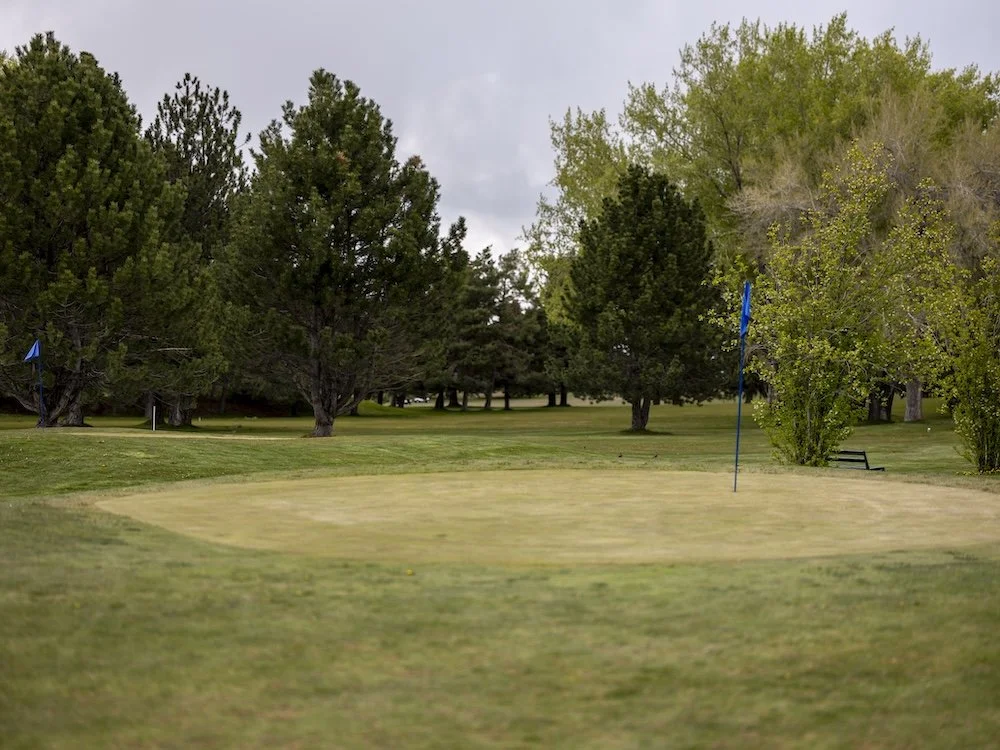
Stand on a golf course early enough in the morning and you begin to notice something that has nothing to do with swing tips, scorecards, or whether your putter is behaving. You notice water.
Not the grand kind. Not lakes and creeks and postcard stuff. The quieter kind. The measured kind. The kind that keeps turf alive, keeps conditions playable, and, when managed well, wastes very little.
That is where the lesson begins.
A golf course lives or dies by timing, coverage, drainage, and restraint. Too much water and turf gets soft, roots get lazy, disease can creep in, and the ground loses that springy life golfers love. Too little and everything turns brittle. The trick is not simply to water more. It is to water smarter.
Homeowners can borrow that mindset.
Because whether you are caring for fairways and greens or a front lawn and a few beds along the fence, the same question hangs in the air: how do you give plants what they need without pouring money and water into the ground for no good reason?
That question matters. The EPA says outdoor water use accounts for nearly 30 percent of average household water use in the United States, and in some parts of the country it can reach as much as 60 percent. It also notes that a large share of landscape water is lost to evaporation, wind, and runoff caused by inefficient watering.
Golf has been wrestling with that reality for years. Homeowners should pay attention.
The First Lesson: Water for Need, Not for Looks
Good golf course irrigation is not about making everything look neon green. It is about keeping turf healthy and playable without using more water than necessary. The same principle works at home.
A lot of homeowners water for color. If the lawn looks a little tired in the afternoon heat, the instinct is to turn the system on longer. But that can be the wrong read. Grass may look stressed for a short stretch of the day and recover on its own by evening. Plants, like golfers, do not always need a rescue after one bad moment.
The better approach is to water for root health. Deep, measured watering generally encourages stronger roots than frequent shallow watering. In practical terms, that means fewer, more thoughtful sessions instead of constant surface-level sprinkles.
Golf course managers learned long ago that overwatering creates weak conditions. Homeowners often learn it the expensive way.
The Second Lesson: Uniform Coverage Matters More Than Good Intentions
On a golf course, irrigation is only as good as its distribution. A broken head, a misaligned nozzle, or one dry pocket can throw off an entire section. What looks like a watering problem is often an application problem.
That is true in residential landscapes too.
If one sprinkler is sending water onto the driveway, another is dribbling short of the lawn, and a third is blasting a flower bed that wanted something gentler, you are not irrigating. You are guessing.
The EPA recommends checking sprinkler heads, pipes, and valves for leaks and damage, and making sure heads are aimed at the landscape rather than streets, sidewalks, and driveways to reduce waste and runoff.
In other words, efficiency starts with coverage.
Before increasing your watering schedule, walk the yard while the system runs. Look for spray hitting concrete. Look for puddling. Look for dry spots. Look for that one rogue head shooting a stream sideways like it has a personal grudge. Small adjustments can make a real difference.
The Third Lesson: Smart Technology Is Useful When It Actually Thinks
Modern golf irrigation is increasingly driven by data. Soil moisture readings, weather patterns, and site-specific conditions all help determine how much water is truly needed. The goal is precision, not habit. The USGA says soil moisture meters and sensors can improve water conservation and help maintain healthier turf.
Homeowners now have access to a simpler version of that same philosophy.
Weather-based irrigation controllers and soil-moisture-based controllers are built to prevent overwatering. The EPA says WaterSense labeled irrigation controllers can tailor watering schedules to weather or soil conditions, and replacing a standard clock timer with a WaterSense labeled controller can save an average home nearly 8,800 gallons of water per year.
That is a useful distinction: a timer is not the same thing as intelligence.
A timer says, “It is Tuesday at 6:00 a.m.; time to water.”
A smart controller says, “It rained yesterday, the soil is still holding moisture, and there is no reason to waste water this morning.”
That is the sort of thinking that good irrigation demands.
The Fourth Lesson: Leaks Are the Silent Score-Wreckers
On a golf course, a hidden irrigation leak can create soft turf, soggy areas, disease pressure, and needless cost. At home, it can do the same in miniature. A leak in a valve box, a cracked lateral line, or a damaged sprinkler head can waste water for weeks before anybody notices.
The EPA says household leaks waste nearly 1 trillion gallons of water annually nationwide, and the average home’s leaks can account for more than 10,000 gallons of water wasted each year.
That is not a plumbing problem alone. It is a vigilance problem.
A homeowner who wants better water efficiency should think like a course superintendent for one afternoon each month: inspect, test, observe, correct. Check for soggy ground when the system has been off. Watch for uneven pressure. Look for heads that fail to pop up, fail to rotate, or never quite shut off cleanly.
Water efficiency is often won in the small repairs.
The Fifth Lesson: Drainage Is Half the Battle
Watering wisely is not only about how much water goes out. It is also about what the ground can accept.
Golf turf performs better when water can move into the soil profile instead of skating across the surface. That is why compaction relief, aeration, and drainage matter so much. The EPA notes that aerating compacted soil can improve infiltration and reduce runoff, while golf industry best practices also point to cultivation and improved drainage as ways to minimize runoff during irrigation or rainfall.
That translates beautifully to home landscapes.
If your yard puddles quickly, the answer may not be more water. It may be better soil structure. It may be aeration. It may be amending a problem area. It may be regrading a section that always holds water. It may be splitting irrigation into shorter cycles so the ground has time to absorb what you are applying.
The EPA specifically recommends a cycle-and-soak approach for clay-rich soils and slopes, allowing water to soak in between shorter irrigation intervals.
That is a sharp lesson from turf management: if water is running off, the schedule is not working.
The Sixth Lesson: Different Areas Need Different Plans
A golf course is not watered as one giant uniform rectangle. Greens, approaches, fairways, rough, native areas, and ornamental spaces all have different needs. Better irrigation comes from recognizing those differences.
Your home landscape deserves the same respect.
Sunny lawn areas, shaded corners, flower beds, shrubs, trees, and slopes do not all want identical watering. Yet many residential systems treat them as though they do. That is how waste creeps in. One zone gets too much because another zone in the same circuit needs more.
The smarter approach is zoning by need. Plants with similar water demand should be grouped when possible. Spray heads should not be doing the work drip irrigation would do better. Beds and shrubs often benefit from a different delivery method than turf.
Precision, again, beats habit.
The Seventh Lesson: Water Use and Playability Are Not Enemies
One of the more interesting truths in golf is that less water can sometimes improve conditions. Firmer turf. Better bounce. Healthier roots. More consistent surfaces. The USGA’s water conservation guidance points to strategies such as precision irrigation, maintenance, deficit irrigation in some situations, and reducing unnecessary turf areas to lower water use while still supporting good conditions.
At home, the equivalent lesson is simple: a better yard is not always the one that gets the most water.
Often it is the one that gets the right water, in the right place, at the right time.
That idea can feel almost un-American in summer. The lawn browns a touch at the edges and somebody reaches for panic. But efficient landscapes are not built on panic. They are built on observation, adjustment, and patience.
The best-looking yard on the block may not be the one using the most water. It may just be the one being managed with the most care.
What Homeowners Can Do Right Now
If you want to apply golf course irrigation lessons at home, start here:
1. Audit your system
Run every zone and watch what actually happens. Check for leaks, misting, overspray, broken heads, and obvious dry spots.
2. Water based on conditions, not routine
Rain, temperature, wind, slope, and soil all matter. Fixed habits waste water.
3. Upgrade the controller if yours is outdated
A smart controller can reduce overwatering by adjusting to weather or soil moisture.
4. Fix drainage issues
If water ponds, runs off, or disappears unevenly, solve the soil and grading problem instead of adding more minutes to the schedule.
5. Use the right irrigation method for the right area
Turf, shrubs, and planting beds often need different delivery methods and different run times.
6. Inspect for leaks regularly
Do not wait for the water bill to tell you something is wrong.
7. Accept that healthy does not always mean soaked
The point is plant health and efficient performance, not nonstop saturation.
The Real Takeaway
Golf courses, for all their scale, can teach homeowners something humble and practical: water works best when it is used with intention.
The lesson is not that your yard should operate like a championship property. It is that water efficiency is less about heroics and more about habits. It is not glamorous. It is observation. Maintenance. Timing. Technology used wisely. Drainage that makes sense. A willingness to stop watering for appearance alone.
That is the part worth bringing home.
Because the smartest irrigation systems, whether they cover acres or a backyard, are built on the same quiet principle:
Use enough. Not too much. And never by accident.
FAQs About Golf Course Irrigation and Home Water Efficiency
What can homeowners learn from golf course irrigation?
Homeowners can learn to water with more precision by focusing on timing, coverage, drainage, and plant needs instead of simply running sprinklers longer. Golf-style irrigation thinking emphasizes efficiency, observation, and consistency.
Do golf courses water every day?
Not necessarily. Many irrigation programs are adjusted based on weather, soil moisture, turf needs, and playing conditions rather than a fixed daily schedule. Smart homeowners can take the same approach.
Is a smart irrigation controller worth it for a home?
For many households, yes. Smart controllers can reduce waste by adjusting watering schedules to weather or soil conditions, and EPA WaterSense guidance says labeled controllers can save an average home around 8,800 gallons of water annually.
How do I know if my sprinkler system is wasting water?
Common signs include water spraying pavement, puddling, runoff, misting, soggy patches, uneven turf color, broken heads, and sudden changes in your water bill. A simple run-through of each zone can reveal a lot.
Why does my yard have dry spots even though I water regularly?
Dry spots often come from uneven sprinkler coverage, poor pressure, compacted soil, slope issues, or hydrophobic soil conditions rather than a lack of total watering time.
What is cycle-and-soak watering?
Cycle-and-soak means watering in shorter intervals with breaks in between so water can infiltrate the soil instead of running off. It is especially useful on slopes and clay-heavy soils.
Does aeration really help water efficiency?
Yes. Aeration can reduce compaction, improve infiltration, and help water reach the root zone more effectively, which may reduce runoff and wasted irrigation.
Are leaks really that big of a problem?
Yes. The EPA says household leaks waste nearly 1 trillion gallons of water each year nationwide, and the average home’s leaks can waste more than 10,000 gallons annually. Outdoor irrigation leaks are easy to miss, which makes regular inspections important.
Should every part of my yard be watered the same way?
No. Turf, shrubs, trees, flower beds, sunny areas, shaded areas, and slopes often need different amounts of water and sometimes different irrigation methods. Grouping similar plant needs together can improve efficiency.
Is more water always better for a lawn?
No. Too much water can lead to shallow roots, disease pressure, runoff, and weak turf performance. In many cases, better scheduling and coverage matter more than simply increasing run time.
External Sources
Recent Writings