How Long Does 18 Holes of Golf Take?
Golf has a funny way of changing the clock. A round can feel like a brisk walk with a few well-struck irons and a good story or two, or it can feel like a small lifetime spent waiting on a tee box while the group ahead searches the horizon for a ball that is almost certainly gone. For most golfers, though, the honest answer is simple: 18 holes usually takes about 4 hours, give or take. In many everyday settings, a twosome can move around faster, while a full foursome on a busy day may drift closer to 4.5 or even 5 hours. Recent round-tracking data has also put the average amateur round at 3 hours and 51 minutes, which tells you something useful: under 4 hours is possible, but a lot depends on the people, the course, and the rhythm of the day.
The Average Time to Play 18 Holes
If you are new to the game, it helps to think in ranges instead of fixed numbers. A single player or twosome on an open course may finish in roughly 3 to 4 hours. A foursome, which is the common shape of public play, often lands around 4 to 4.5 hours. Add a crowded tee sheet, a hard layout, a little wind, and a few searches in the rough, and now you are flirting with 5 hours. That is not unusual. It is golf being golf.
There is also the question of what a round should feel like. One recent golf commentary argued that 3.5 hours is the sweet spot for 18 holes when there is no waiting and the course is flowing. That is opinion, not law, but it tracks with how many golfers experience the game: once a round pushes well past 4 hours without good reason, the day starts to sag.
Why Some Rounds Feel Fast and Others Feel Endless
The biggest factor is the simplest one: how many people are in your group. More players means more pre-shot routines, more yardages, more putts, more decisions, and more time. Skill level matters too, though maybe not in the way people assume. Data on amateur golfers shows there is not a huge difference in round times across handicaps, which suggests slow play is not just about beginners. A group can move well at any skill level if everyone is ready, aware, and honest about when to move on.
The course itself matters. Shorter, simpler, more walkable layouts tend to play faster. Longer courses with forced carries, trouble off the tee, long walks between green and next tee, and more severe greens tend to stretch the day. Executive and par-3-heavy layouts can be faster, while longer championship-style setups often take longer.
Then there is traffic. Even a quick group cannot outrun a packed course. Weekend mornings, holiday tee sheets, and tightly stacked starting intervals can turn a good pace into a slow trudge. Governing-body pace guidance for course operations recommends wider starting intervals as group size increases, which gives you a sense of how much spacing matters to flow.
Walking vs. Riding: Which Is Faster?
Most golfers assume a cart automatically saves time. Often it does, but not always. On roomy layouts with long gaps between holes, riding can help. On crowded courses, carts can create their own delays, especially when two players share one cart and move like a married couple in a hardware store, drifting together from one ball to the next. Guidance on pace of play recommends a smarter system: drop one player with a few clubs, move to the other ball, and keep both golfers engaged.
Walking, meanwhile, is not necessarily slow. It can be wonderfully efficient when players stay ready, read the ground as they go, and carry only what they need. Many walking rounds move beautifully because the golfer never leaves the game. The pace becomes steady, almost conversational. Walking may add time in some settings, but the difference is often less about feet and more about habits.
How Far Do You Actually Walk in 18 Holes?
The scorecard yardage is not the same thing as the miles you log. A standard 18-hole course may measure roughly 6,000 to 7,200 yards, or about 3.5 to 4 miles in straight-line course distance. But golfers do not move in straight lines. They walk to the wrong side of a fairway, around bunkers, across greens, toward carts, and into the weeds to identify what they pray is their golf ball. That is why many estimates place actual walking distance at around 4 to 6 miles or more, depending on the layout and the kind of day you are having.
For beginners, this is useful to know because it changes how you prepare. Bring water. Eat something. Wear shoes you trust. Golf may not look like a fitness activity from the parking lot, but by the 16th hole, your legs know the truth.
How Long Should Each Hole Take?
There is no stopwatch built into the Rules, but rough timing patterns are easy to understand. A par 3 usually moves quicker than a par 5. A clean hole moves quicker than a messy one. One source breaks it down roughly like this: about 10 to 12 minutes for a par 3, 12 to 15 minutes for a par 4, and 15 to 18 minutes for a par 5. That is not exact science, but it gives new golfers a useful frame for the pace of a round.
The Real Culprit Behind Slow Play
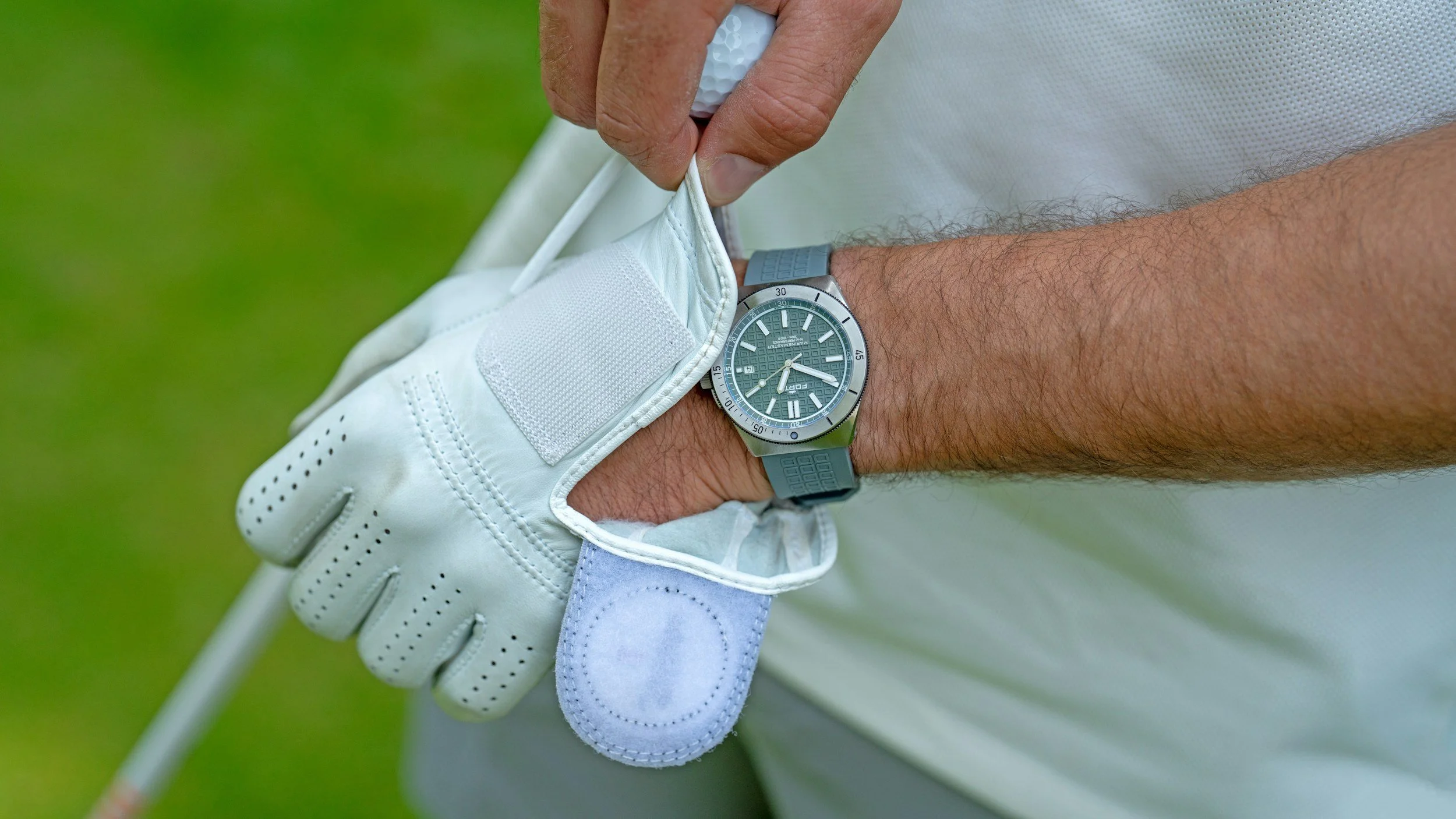
Slow play is rarely one dramatic thing. It is usually death by a thousand delays: three practice swings instead of one, a glove search, a yardage debate, a second read of a six-foot putt, a cart parked in the wrong place, a score entered on the green instead of the next tee, a ball hunt that becomes a full archaeological dig.
The game’s governing bodies have been clear on a few common-sense pace ideas. Ready golf is encouraged when done safely. Players are urged to plan shots before it is their turn, keep a short pre-shot routine, and even aim to play the stroke itself in about 20 seconds once ready.
There is also a rule-based reason not to lose yourself in the weeds. Under the Rules, a player has three minutes to search for a lost ball before it is considered lost. That alone can save a group from bleeding time on every hole where hope outlives evidence.
How to Play 18 Holes Faster Without Rushing
This is the trick. Nobody wants golf to feel frantic. The goal is not to sprint. The goal is to be ready.
A faster round usually comes from ordinary habits:
Choose a tee set that fits your game.
Bring extra balls and tees where you can reach them.
Watch everyone’s shots, not just your own.
Play ready golf when it is safe.
Pick a club while others are playing.
Limit rehearsal swings.
Leave clubs on the side of the green closest to the next tee.
Record scores at the next tee, not beside the hole you just finished.
If a hole has gone sideways and you are out of it in a casual round, pick up and move on.
For newer players, that last point matters. Good pace is not about pretending to be a tour player. It is about understanding that everyone shares the course. Play with intention. Be generous with the group behind you. Be honest about when to reload and when to let one go.
So, How Long Does 18 Holes Take?
The best answer is this: plan for around 4 hours, expect variation, and know the game gets easier to schedule once you understand its rhythm. A clean twosome on an open course may get around in under 4. A crowded foursome may need 4.5 or more. A lot of golfers think a smooth round feels best around 3.5 to 4 hours, but golf is not a machine. It is an outdoor game, played by human beings, one decision at a time.
And maybe that is the right way to end it. Golf takes time because it asks for attention. Not panic. Not fuss. Just attention. When the pace is right, the round has a kind of music to it. You walk, you wait just enough, you hit, you laugh, you search a little, you find a little, and before long the day is gone in the best possible way.
FAQs
How long does it take to play 18 holes of golf?
Most rounds of 18 holes take about 4 to 4.5 hours, though smaller groups on an open course may finish faster and crowded rounds may take closer to 5 hours.
Can you play 18 holes in under 4 hours?
Yes. Many golfers do, especially in twosomes, on less crowded days, or on shorter and simpler layouts. Recent tracked amateur data averaged 3 hours and 51 minutes.
How long does 9 holes of golf take?
A reasonable estimate is about 2 hours, though it can be less for a single or twosome and more during busy periods. This is a practical inference based on 18-hole timing ranges.
Does walking make a round much longer?
Sometimes, but not always. Walking can add time on larger courses, yet many walking groups keep an excellent pace because they stay engaged and move directly to their next shots. Smart cart use can help too, especially when partners separate efficiently.
How many miles do you walk in 18 holes?
Most golfers walk more than the scorecard yardage, commonly around 4 to 6 miles or more, depending on the layout, your shot pattern, and whether you ride part of the day.
What slows down a round the most?
Common causes include crowded tee sheets, long ball searches, too many practice swings, slow routines, poor cart management, and groups failing to keep up with the group ahead.
What is ready golf?
Ready golf means playing when you are ready and it is safe to do so, rather than waiting rigidly for formal order. The Rules encourage it as a pace-of-play tool.
How long are you allowed to search for a lost ball?
Under the Rules, a ball is lost if it is not found and identified within three minutes of the search beginning.
External Sources
Recent Writings