Guide to Your First Month of Golf
There is a moment early in golf when the whole game feels like a contradiction. The place looks peaceful. The grass is clipped. The flag flaps softly. Then you put a club in your hands, make one earnest swing, and discover that this serene old game can make you feel clumsy, hopeful, humbled, amused, and slightly obsessed all in the span of ten seconds.
That is the first month of golf.
It is not really about getting good. Not yet. It is about learning how golf works, how golfers move through the day, how a ball behaves when struck well, and how often it does not. It is about learning that improvement comes in crooked lines, not straight ones. It is about finding enough joy in the mishits to stay for the pure ones.
If you are brand new, welcome. If you have been around golf for years, you already know this: the first month matters. It shapes whether a newcomer feels invited into the game or quietly pushed out of it. So this guide is for both groups. For the beginner, it is a map. For the experienced player, it is a reminder of how to help somebody fall in love with golf.
Week 1: Start Small, Start Easy, Start Without Pride
A lot of new golfers think they need to begin with a full round, a complete set of clubs, a polished pre-shot routine, and a working knowledge of every rule in the book. They do not.
What they need is a soft entry.
The first week should be about contact, comfort, and curiosity. Go to a driving range. Go to a practice green. Hit short shots before long ones. Putt before you try to launch a driver into the next zip code. Learn what solid contact feels like. Learn what a miss feels like, too. Both are part of the education.
This is also the week to lower the temperature. Golf has a way of making people serious before they have earned the right to be serious. Resist that. For a beginner, fun is not separate from improvement. Fun is what keeps improvement alive.
You also do not need a handicap to begin playing. A handicap is mainly useful for fair competition and tracking progress over time, not for getting started.
Week 2: Get One Lesson Before Bad Habits Rent the Place
There is an old temptation in golf to figure everything out alone. Sometimes that works if you are gifted, patient, and oddly tolerant of frustration. Most people are not.
A good first lesson can save months of confusion.
A beginner lesson usually begins with a conversation: what you have done before, what feels difficult, and what you hope golf becomes for you. From there, most instructors move into grip, stance, posture, and a few simple motion cues. It is not usually a deep philosophical excavation of the swing. It is a foundation.
The key is not to find the “best” teacher in some abstract sense. It is to find one who makes the game make sense to you. Golf instruction is translation. One person says, “Turn your chest.” Another says, “Brush the grass after the ball.” Another says something so simple it sticks forever. You are looking for that last person.
If your budget allows only one lesson in your first month, take it early. It is easier to learn well than to unlearn badly.
Week 3: Learn the Course Without Letting the Course Humiliate You
Your first rounds should not be exams. They should be introductions.
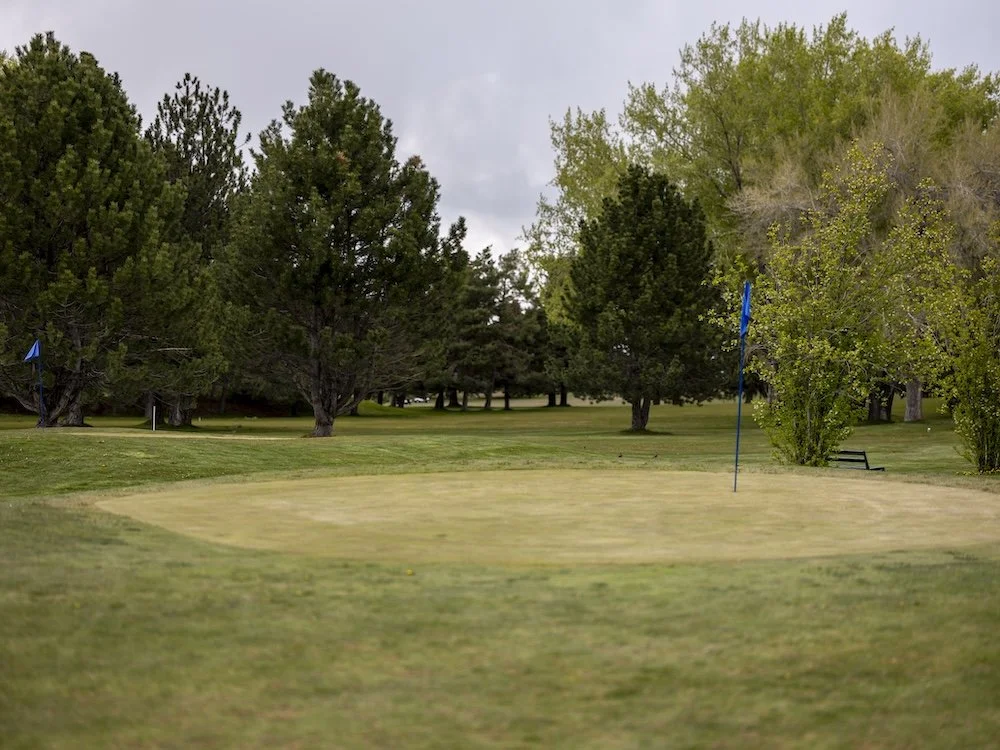
Choose a shorter, friendlier setup when you can. Short courses, par-3 layouts, and forward tees make the game less punishing and far more teachable for new players. They also keep the round moving, which helps everybody. Beginner-friendly short courses are widely recommended as a smart starting point.
And pick the right tees. This matters more than pride will tell you. Guidance from golf associations recommends choosing tees based on how far you hit your 7-iron so the course plays closer to how it was intended.
For the beginner, a first round has modest goals:
make some clean contact,
find the green once or twice,
learn where to stand,
learn when to talk,
learn when to be quiet,
and leave wanting to come back.
That is a successful day.
You do not need to keep score with religious precision at first. You do need to learn the rhythm of play. Watch where others stand. Bring a few clubs when you walk to your ball. Be ready when it is your turn. If a hole goes sideways, pick up and move on. These are not failures. These are the mechanics of joining the game.
Week 4: Understand That Progress in Golf Is Weird
This may be the most important lesson of the first month: improvement in golf is not linear.
You can hit it beautifully on Tuesday and barely find the clubface on Thursday. You can feel as though you have solved chipping in one evening and forget how to do it two days later. This is normal. New golfers often mistake inconsistency for incapacity. It is not. It is just golf.
Intentional practice helps more than sheer volume. Focusing on one skill at a time, especially around the green, is repeatedly recommended in beginner guidance because short shots and putting can build confidence faster than chasing perfect full swings.
If you want a practical first-month practice split, try this:
40% putting and short game
40% half-swings and solid contact drills
20% full swings and driver
That may not sound glamorous, but golf is not conquered by glamour. It is learned through repetition, attention, and a growing tolerance for modest gains.
Related: How to Hit a Draw in Golf
What You Actually Need in the First Month
One of golf’s great myths is that you need everything all at once.
You do not.
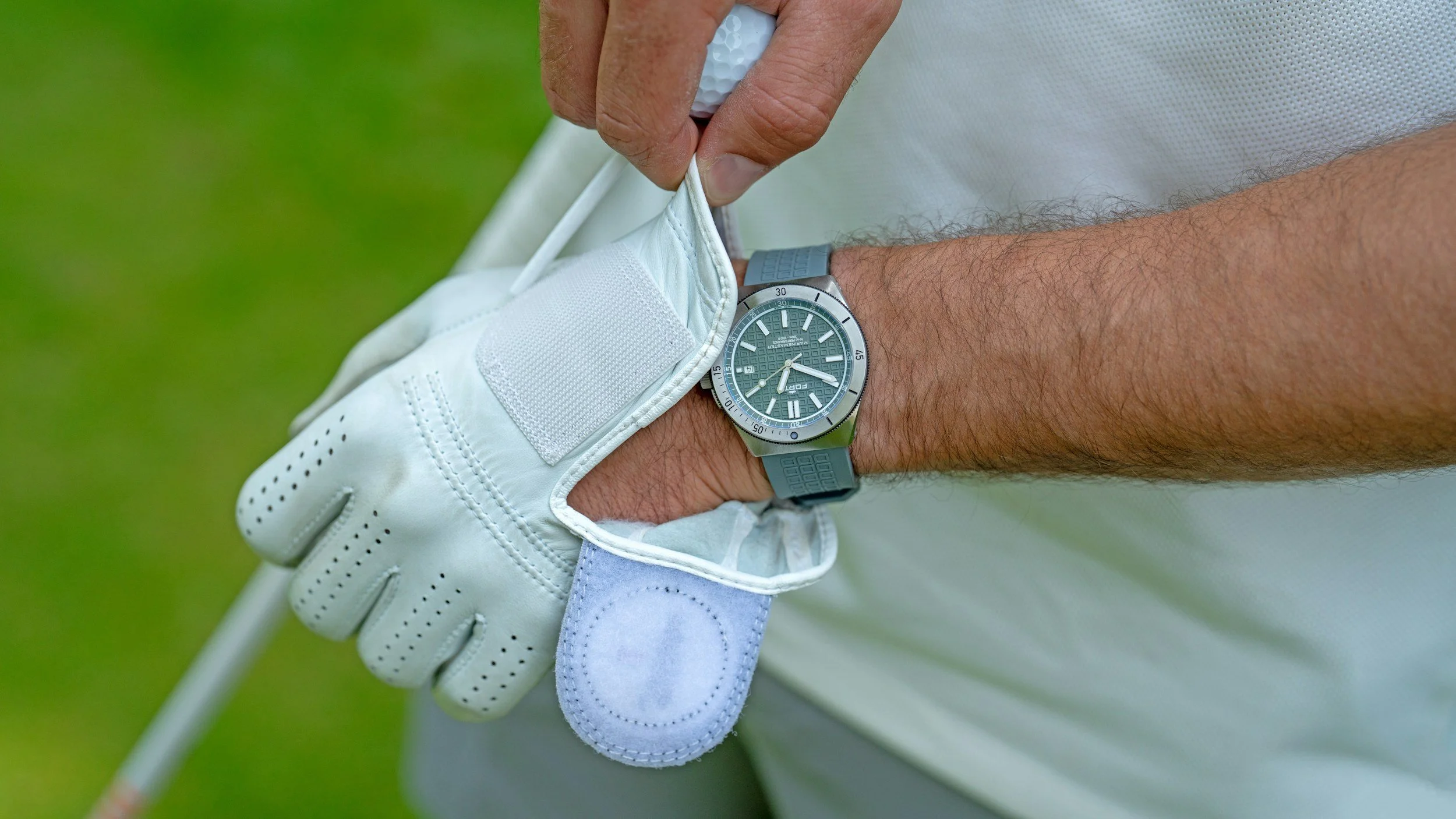
For your first month, you need enough equipment to participate comfortably, not enough to look like you belong in a catalog. Beginner gear lists commonly focus on a few basics: clubs, balls, tees, a bag, a glove, and practical extras like a towel and sun protection.
A simple beginner setup might include:
a putter,
a wedge,
a mid-iron,
a fairway wood or hybrid,
and a driver if you want one.
That is enough to begin learning the game.
Borrow clubs if you can. Rent clubs if that is easier. Buy used clubs if you want your own set without the sting of retail pricing. In the first month, the best equipment is the equipment that gets you out there again next weekend.
The Hidden Skills Beginners Need
Golf instruction often begins with grip and posture, and rightly so. But the first month also asks for other skills that rarely get top billing.
1. Emotional control
A bad shot does not require a bad next five minutes. New golfers often lose more strokes to frustration than mechanics.
2. Pace of play
This is one of the kindest things you can learn early. Be ready. Think ahead. Keep your routine short. Golf’s governing bodies emphasize prompt play and note that players should prepare in advance and keep moving between strokes. USGA pace-of-play guidance even recommends aiming to play in about 20 seconds when it is your turn, while formal pace guidance notes a stroke should generally be played within 40 seconds.
3. Course awareness
Stand where you are safe. Stay quiet when someone is hitting. Repair what you disturb. Replace divots when appropriate. Fix ball marks on the green. Rake bunkers. Beginners are not expected to know everything, but awareness goes a long way.
4. Realistic expectations
You are not trying to look like a polished golfer in the first month. You are trying to become a returning golfer.
That is different, and it is better.
For Better Players: How to Help a Beginner Enjoy Golf
If you are introducing somebody to the game, remember this: your job is not to overwhelm them with all you know. Your job is to leave them with enough confidence to come back.
Let them play from forward tees.
Let them pick up.
Do not correct every swing.
Do not hand them seven swing thoughts on one tee box.
Celebrate one flushed 9-iron as if it mattered, because to them, it does.
It is easy for experienced golfers to forget how strange the game is at the beginning. The language is unfamiliar. The customs are invisible until violated. The swing feels unnatural. The scorecard looks like tax paperwork. Patience is not just polite. It is a recruitment strategy.
What “Good” Looks Like After One Month
Not a number.
Not a handicap.
Not a score somebody else would admire.
Good, after one month, looks like this:
You know how to hold the club without feeling lost.
You can make contact often enough to enjoy the round.
You understand the basic flow of play.
You know where to stand, what to bring, how to keep moving.
You have hit a few shots that felt so pure they made the whole experiment worthwhile.
That is enough.
The first month of golf is not about mastery. It is about staying in the game long enough for the game to begin talking back to you. It will, in time. Through one clean chip, one putt that tracks all the way, one iron shot that rises against the sky with that old, unmistakable promise.
Then you are in trouble, of course.
Then you are a golfer.
FAQs About Your First Month of Golf
Do I need a handicap to start playing golf?
No. You do not need a handicap to begin playing. A handicap is mainly used for fair competition and for tracking improvement over time.
Should I take a lesson before I play my first round?
Yes, if you can. Even one lesson early on can help with grip, stance, posture, and basic contact, which can prevent bad habits from taking root.
How often should a beginner practice in the first month?
Two or three short sessions a week is usually more helpful than one long, exhausting session. Consistency matters more than marathon practice. Intentional practice on one area at a time is especially helpful.
What part of the game should I practice most as a beginner?
Putting and short game are smart places to spend a lot of your time. They build touch, confidence, and scoring skill without requiring a full-speed swing on every shot.
Do I need a full set of clubs in my first month?
No. A smaller starter set is enough to learn the game. Many beginners do well with a putter, wedge, mid-iron, hybrid or fairway wood, and optionally a driver. Basic gear guidance also highlights balls, tees, a bag, a glove, and a towel.
Which tees should I play from as a beginner?
Play from tees that match your current distance, not your ambition. Guidance commonly recommends choosing tees based on how far you hit your 7-iron so the course is playable and enjoyable.
What should I expect in my first golf lesson?
Most first lessons start with a conversation about your goals and experience, then move into basics like grip, stance, posture, and a few simple movement ideas. The point is to build a foundation, not rebuild your swing in an hour.
How do I avoid slowing down play as a beginner?
Be ready when it is your turn, bring the clubs you may need, keep practice swings limited, and move on quickly after a lost ball or blow-up hole. Pace of play is largely about preparation and awareness.
How long does it take to get decent at golf?
Longer than most people hope, and that is normal. Progress is uneven. Most golfers improve through patient practice, lessons, and repetition over time rather than quick breakthroughs.
Is it okay to play just for fun and not keep score at first?
Absolutely. For many beginners, playing socially, learning the rhythm of the game, and enjoying the day is a better introduction than obsessing over every stroke.
External Sources
Recent Writings