Beginner’s Guide to Your First Driving Range Visit
There is a certain innocence to a first trip to the driving range. A bucket of balls looks manageable. A club feels simple enough in the hands. The whole enterprise appears civilized, almost gentle. Then comes the first swing, and the game introduces itself properly: golf is less about force than sequence, less about effort than timing, less about winning than learning to pay attention.
That is part of its charm.
A driving range is one of the best places in golf to begin. It gives you room to miss, room to experiment, and room to discover that a cleanly struck golf ball has a sound all its own. For the beginner, it is a place to build comfort. For the experienced player, it is a workshop, a reset button, and sometimes a truth serum. The ball flight does not flatter. It tells you what happened.
What a Driving Range Is Really For
Many first-time golfers think the range is there to teach power. In reality, it teaches contact, rhythm, and pattern. You go there not merely to hit balls, but to notice things: where the club meets the turf, how the ball starts, whether your balance holds, whether one simple thought helps more than five complicated ones.
That is true for beginners and better players alike. Good range sessions are rarely random. The most productive practice has purpose, even if the purpose is modest. Some days that means warming up. Some days it means rehearsing one club, one shot shape, or one part of your setup. Some days it means preparing for the first tee by slowing the heart and finding a manageable tempo.
What to Bring to the Driving Range
You do not need a tour bag and an air of expertise. You need a few clubs, comfortable clothes, and a willingness to look a little uncertain at first
A beginner can do plenty with:
a wedge
a 7-iron or 8-iron
a hybrid or fairway wood
a putter, if there is a putting area nearby
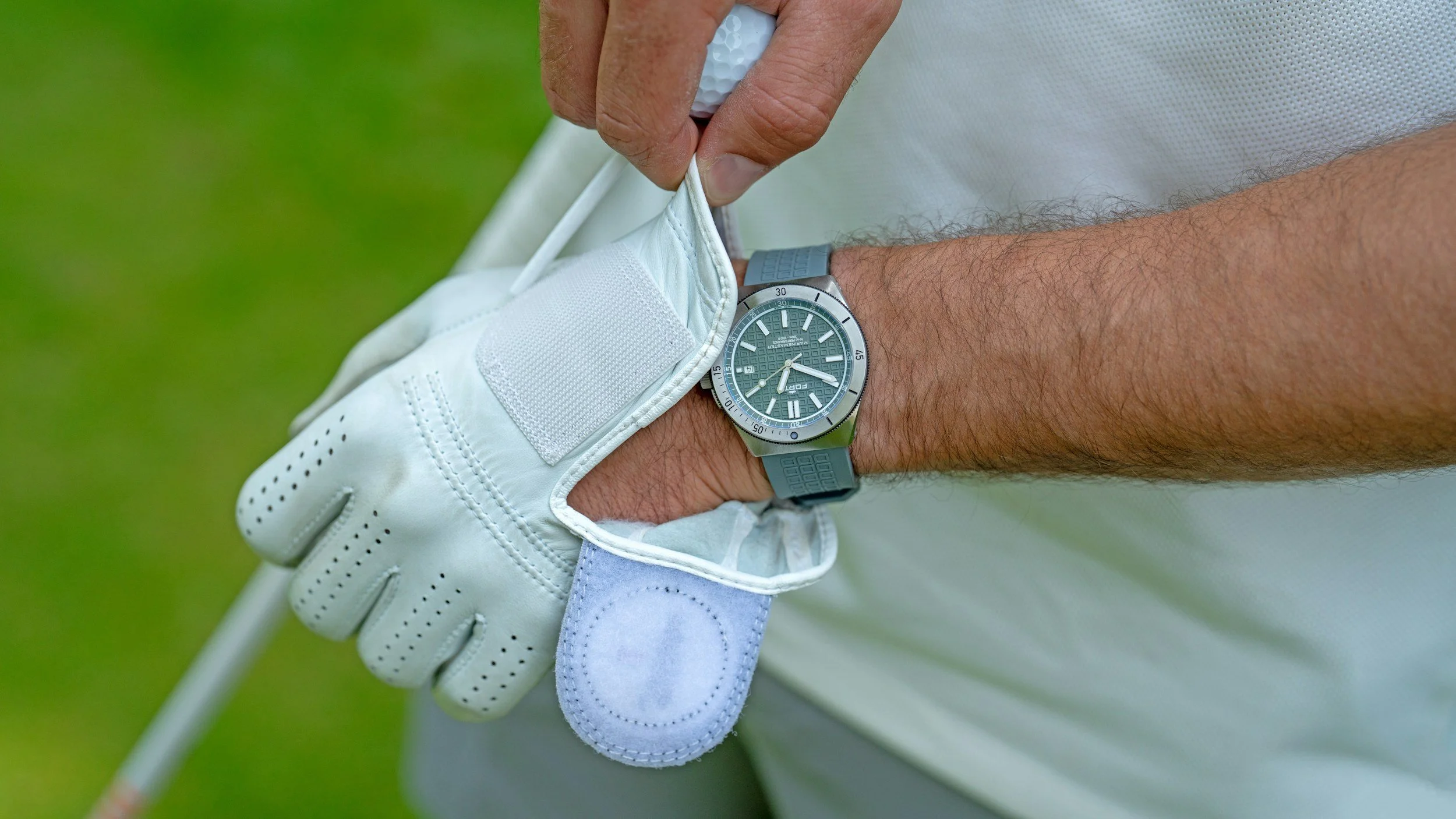
a glove, if you like using one
water, especially in warm weather
That is enough. In fact, it may be better than hauling every club you own to a place where you are still learning what a golf swing feels like. Simplicity has a way of calming the mind, and calm is useful in golf.
What to Expect When You Arrive
A first visit can feel more intimidating than it should. Buckets rattle. Better players stripe balls into the distance. Everyone seems to know where to stand. But the range is for learners too. In many places, it is especially for learners.
Get there a little early. Give yourself time to settle in. Stretch a bit. Look around. Notice where people are hitting from and where the targets are set. If there is a short-game area or practice green, take a look. A little familiarity goes a long way in a game that can otherwise make a newcomer feel hurried.
Start Small, Not Heroic
This is where many first visits go sideways. The beginner reaches immediately for the driver, takes a swing meant for the final hole of a major championship, and discovers three hard truths in under two seconds: the ball is small, the club is long, and trying to hit it hard is not the same as hitting it well.
Start with a wedge or a short iron instead. Hit short shots first. Half-swings are welcome. Quarter-swings, too. Let the body wake up. Let the hands learn the weight of the club. Let the ball get in the way of a motion rather than become the victim of one. A number of teaching sources recommend beginning a range session with wedge shots, and beginner guidance also emphasizes learning the game from the shorter shots outward rather than beginning with maximum speed.
The Three Basics That Matter Most
If golf has a quiet religion, its catechism is simple: grip, posture, alignment.
Grip
Hold the club securely, but not as if you are trying to extract a confession from it. Tension travels. If your hands are too tight, the swing often gets tight everywhere else.
Posture
Bend from the hips, not from despair. Let the arms hang naturally. Keep athletic balance in your feet. A good posture gives the swing somewhere to go.
Alignment
Many poor shots begin before the club moves. A golfer can make a decent swing with bad aim and learn the wrong lesson from the result. Pick a target. Then make sure your body is not quietly aiming somewhere else.
These fundamentals are enduring because they travel well. They help the first-timer make cleaner contact, and they keep the accomplished player from wandering into preventable trouble.
How to Structure Your First Bucket
A first range session does not need complexity. It needs order.
A useful sequence might look like this:
1. Begin with short shots
Hit easy wedge shots. Think about brushing the grass and making centered contact.
2. Move to a mid-iron
Try a few relaxed swings with a 7-iron or 8-iron. Do not chase distance. Chase balance.
3. Hit a hybrid or fairway wood
If you want to try something longer, this is often a friendlier next step than a driver.
4. Finish with a few target-based swings
Pick one flag or marker and pretend each ball matters. Step in, aim, swing, and watch.
5. Stop before fatigue teaches you bad habits
A tired swing is a persuasive liar. It convinces you that you are making progress while you are often just rehearsing poor motion.
That kind of progression mirrors how many coaches advise golfers to practice: start with control, build gradually, and give the session a purpose rather than letting it turn into ball-beating.
What Good Contact Feels Like
Beginners often assume a good shot feels violent. It usually feels the opposite. The strike is crisp. The balance stays intact. The ball leaves in a way that feels almost suspiciously easy.
This can be disappointing for the novice who expects fireworks. But it is excellent news. It means good golf is available through sequence and repetition, not brute strength. The seasoned player knows this already. The new player gets to discover it, which is one of the secret pleasures of learning the game.
A Word About Driver Anxiety
The driver has a reputation, and not an undeserved one. It is the most theatrical club in the bag, the one that inspires ambition and exposes impatience. You can hit it on your first range visit, of course. But you need not begin there, and you certainly need not measure your future in golf by what happens when you do.
If you try it, make a smooth swing. Tee the ball up. Do not lunge. Think sweep, not chop. Think wide arc, not emergency rescue operation. And if the driver misbehaves, as it often does, set it down without drama and return to a club that lets you feel competent. There is no shame in postponing a battle.
Range Etiquette Matters More Than You Think
Golf is a personal game played in public. The range teaches this early.
Be aware of the space around you. Stand behind the hitting line unless it is your turn. Do not walk close to someone who is swinging. Keep conversations and music at a considerate level. Do not treat the range picker as target practice. Leave your station reasonably tidy.
The point is not fussiness. The point is shared space. Good etiquette makes the range more comfortable for everyone, and comfort helps learning.
Practice With a Little Intention
Once the beginner has survived the first few visits, the range becomes more useful when each bucket has a theme.
Try one of these:
contact first: focus on clean strikes
target practice: pick one distance and stay with it
pre-round session: warm up through the bag without overdoing it
course simulation: imagine fairways, greens, and real decisions
tempo day: same rhythm, different clubs
This idea applies to advanced players too. The best practice is not always the most technical. Sometimes it is simply the most honest. Choose a target. Pick a shot. Commit to it. Then see what the ball says back.
Beginners Should Not Ignore the Short Game
One of the enduring mistakes in golf is thinking that improvement lives only at the far end of the range. It does not. It also lives in the little shots, the ones that ask for touch more than speed.
Beginner guidance from teaching sources often recommends learning from the green backward, not from the tee forward. There is wisdom in that. Chipping, pitching, and putting teach feel, strike, and clubface awareness without demanding a full swing. They also make the game more playable more quickly, which is no small mercy.
Pace, Rhythm, and the Adult Temptation to Overtry
A first-time golfer often swings like someone late for a train. Everything rushes. The backswing gets snatched away. The downswing arrives before the body is ready. Balance leaves town.
Try this instead: swing as though you have time. Because you do.
In golf, rhythm is not decorative. It is structural. Better tempo usually improves contact, direction, and confidence all at once. It also makes practice less exhausting. For the experienced player, tempo restores order. For the beginner, it is often the first real breakthrough.
When a Lesson Helps
There is a point where self-discovery is noble and a point where ten minutes with a trained eye can save ten months of confusion. If you enjoy your first few range visits but feel stuck, a lesson is often a smart next step. Beginner golf resources commonly recommend early guidance, whether in a group setting or one-on-one, because it can establish sound fundamentals before compensations harden into habits.
The Real Goal of a First Driving Range Visit
It is not to hit perfect shots.
It is not to impress anyone.
It is not even to prove that golf comes naturally.
The real goal is simpler: leave wanting to come back.
If you make a few clean strikes, wonderful. If you learn how a wedge feels, excellent. If you discover that golf is harder than it looks but more interesting than you expected, then the range has done its work.
That is how the game begins for most people. Not with mastery. With curiosity.
And that is enough.
FAQs About Your First Driving Range Visit
1. What clubs should a beginner bring to the driving range?
A beginner only needs a few clubs to start well: a wedge, a mid-iron, and possibly a hybrid or fairway wood. This keeps the session simple and helps you focus on contact and rhythm instead of constant club changes.
2. Should I start with a driver on my first range visit?
Usually, no. Most new golfers benefit from beginning with shorter clubs because they are easier to control and better for learning setup, strike, and tempo. You can work up to the driver once you feel more comfortable.
3. How many balls should I hit during my first session?
A small or medium bucket is usually enough. The first visit should be about quality, not quantity. Once fatigue sets in, beginners often start practicing bad habits without realizing it.
4. What should I focus on most at the range?
Focus on grip, posture, alignment, and balanced swings. Those basics matter more than raw distance. Clean contact and consistent rhythm are better early goals than trying to hit the ball as far as possible.
5. Is it normal to miss a lot of shots at first?
Completely normal. Golf is difficult, and the range is where misses become useful information. Even experienced players use the range to diagnose patterns and make adjustments.
6. How do I know if I am improving?
Improvement often shows up first in better contact, more balance, and more predictable ball flight, not necessarily more distance. If your misses become more consistent and your solid shots happen more often, you are moving in the right direction.
7. How long should a driving range session last?
For most beginners, 30 to 45 minutes is plenty. A shorter, more focused session is usually more productive than a long one that turns sloppy.
8. Do I need a lesson before going to the driving range?
Not necessarily, but a lesson can help you avoid common setup and swing mistakes early. Many golfers enjoy a few solo visits first, then take a lesson once they have questions and a better sense of what feels difficult.
9. What is proper driving range etiquette?
Stay aware of the people around you, wait your turn to step into the hitting area, keep noise reasonable, and leave your station neat. Range etiquette is less about formality than respect and safety.
10. Is the driving range useful for advanced golfers too?
Very much so. Better players use the range to maintain fundamentals, rehearse specific shots, warm up efficiently, and prepare for rounds with clear intention.
External Sources
Recent Writings