Beginner’s Guide to Playing 9 Holes
There is something honest about nine holes.
Eighteen can feel like a declaration. Nine feels like an invitation.
For the beginner, that matters. A shorter round lowers the temperature. It gives the game room to breathe. It lets a new player learn how a course works without feeling as if the whole sport is standing over the ball with crossed arms. And for the seasoned player, nine holes can be its own kind of pleasure: brisk, useful, social, and full of the same small tests that make golf so maddening and so dear.
That is the beauty of it. A nine-hole round is not a lesser version of golf. It is golf, just concentrated. Less wandering, less weariness, fewer opportunities to lose the thread. You still have the first-tee nerves. You still have the wedge shot that asks for touch instead of bravery. You still have the putt that looks straight until it starts misbehaving halfway there.
If you are brand new to the game, nine holes may be the smartest way to begin.
Why 9 Holes Is the Right Place to Start
A beginner does not need more golf. A beginner needs better golf.
That means a pace that allows you to think, recover, and enjoy yourself before frustration hardens into habit. Nine holes gives you enough time to settle down after the first few swings, enough repetition to learn something, and enough mercy to leave the course wanting more.
There is practical wisdom behind that feeling, too. Golf development programs and pace-of-play guidance from governing bodies have long supported shorter forms of play, including 3, 6, and 9 holes, as useful ways to make the game more approachable and enjoyable. “Ready golf” and prompt play are also encouraged to help keep rounds moving.
And if you are the kind of player who tracks a handicap, nine-hole scores can count when played on a course of sufficient length under the rules of handicapping.
So no, nine holes is not cheating. It is not cutting corners. It is a practical, proper, deeply playable version of the game.
Related: Beginner’s Guide to Playing 18 Holes
What a Beginner Should Expect
The first surprise for most new golfers is this: golf is not only about hitting the ball.
It is about where to stand, when to speak, when to be still, what to carry, where to place the bag, how to repair the small damage your shoes and clubs cause, when to move, when to wait, when to laugh at yourself, and when to let a bad hole die a decent death.
Nine holes introduces all of that in manageable doses.
You will likely feel rushed at first, even if no one is rushing you. That is common. Golf has a way of making time feel different. A player can spend twenty seconds over a shot and somehow feel he has been there an hour. The cure is not panic. The cure is rhythm.
Arrive early enough to breathe. Putt a little if a practice green is available. Chip a few if you can. Make enough swings to wake up your hands and your back and whatever part of your mind still believes the day might turn noble. Then head to the first tee with a simple ambition: make the next decision a reasonable one.
That is all golf really asks, though it asks it over and over again.
Before You Tee Off
For a first nine-hole round, bring less ego and more common sense.
Here is what helps:
A small handful of tees
Golf balls you can afford to lose without grieving
A ball marker
A divot repair tool
Water
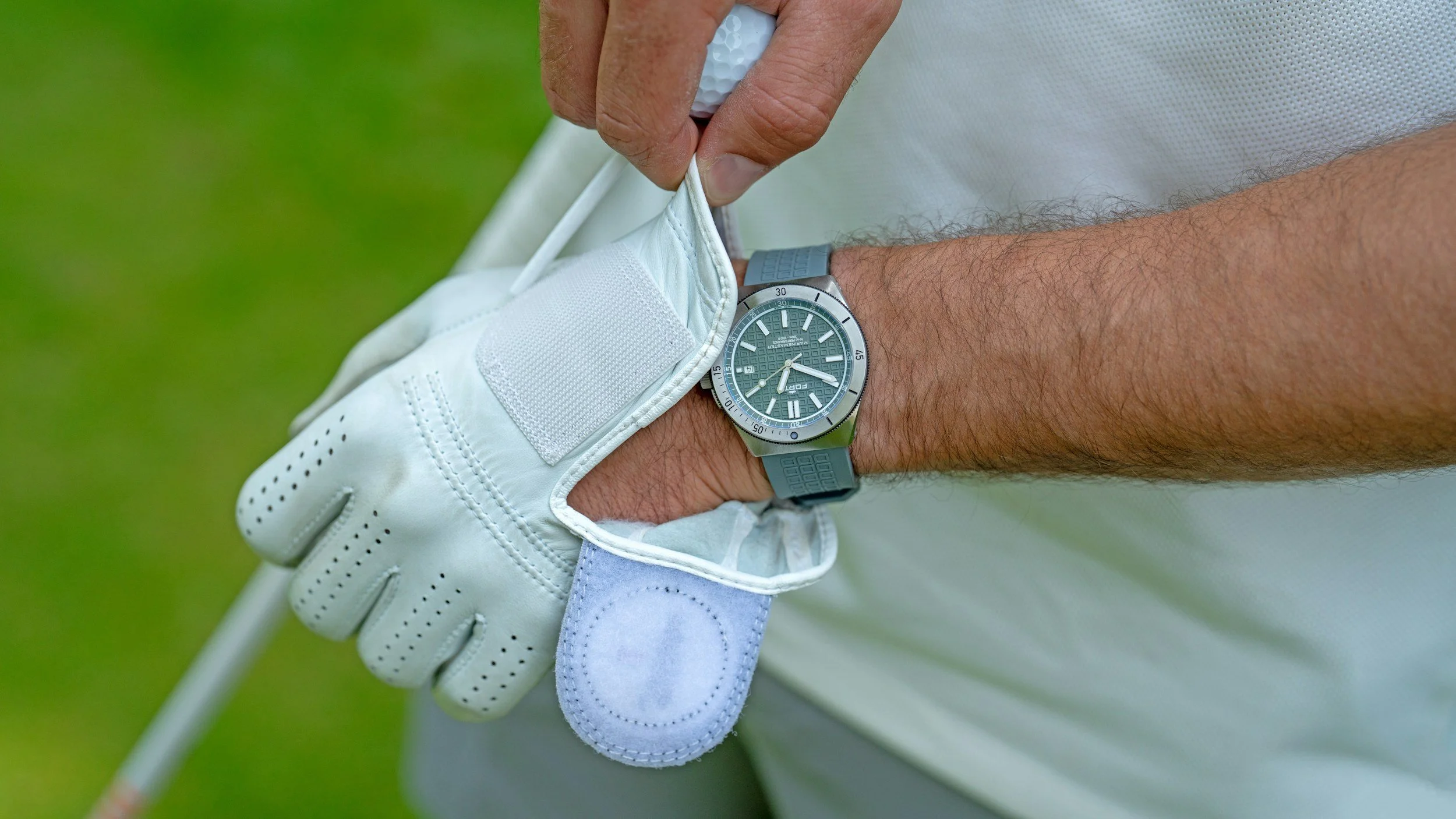
A glove, if you wear one
A few clubs you trust, not necessarily every club you own
Beginners often believe preparedness means carrying everything. It rarely does. Preparedness is knowing what you are likely to use and being ready when it is your turn.
Wear something comfortable and neat. Check the expectations wherever you are playing. Some facilities are relaxed. Some are traditional. Either way, looking like you meant to be there is half the battle in a game that can make newcomers feel as if they’ve wandered into a private language.
Choosing the Right Tees
One of the quiet mistakes beginners make is starting from tees that are too far back.
There is no glory in turning every hole into an endurance test. The game is more fun and more educational when you can reach fairways, greens, and scoring areas in a sensible number of strokes. Research and guidance around golfer experience and player development support choosing tees and yardages that match skill level and distance, especially for newer players.
A good rule of thumb: choose the set of tees that allows you to play the course, not merely survive it.
The better player already knows this, even if pride occasionally interferes. The newer player should learn it early and keep it for life.
How to Keep Pace Without Feeling Hurried
There is a difference between playing quickly and playing efficiently.
Quick golf is frantic. Efficient golf is prepared.
The governing bodies of the game encourage prompt pace and “ready golf” in stroke play, which means playing when it is safe and sensible to do so rather than clinging too tightly to ceremony. Beginner guidance from teaching organizations also recommends limiting pre-shot routine time and planning the next shot while walking to the ball.
On the course, that looks like this:
Bring a couple of clubs when you are unsure of the distance.
Start thinking about the shot while you walk.
Be ready to hit when it is safe and your turn arrives.
Park your bag or cart where you can leave the green efficiently.
Mark your score at the next tee, not beside the hole.
For the beginner, pace of play is not about impressing anyone. It is a form of courtesy. It says: I may be new, but I understand I am sharing the day.
The Basic Shape of a Good Nine-Hole Round
If you are new, forget perfection. Chase structure.
A good beginner round usually has this shape:
1. Get the ball in play
The heroic shot is often the wrong shot. Off the tee, your first responsibility is not brilliance. It is usefulness. Find grass. Advance the ball. Leave yourself another swing.
2. Aim for the wide part
Aiming at the narrow, dramatic, dangerous piece of any hole is a wonderful way to become intimate with trouble. The wide part of the fairway has rescued more scorecards than talent ever did.
3. Accept the bogey before you need to
Beginners make golf harder by demanding pars from games not yet built for pars. There is no shame in playing for the next sensible shot. In fact, many experienced players would save themselves a great deal by remembering this.
4. Spend your energy near the green
The game turns there. A topped drive is embarrassing. A careless chip is expensive. A three-putt is democratic. It visits everyone. If you want your nine-hole round to improve fastest, pay attention to short shots, distance control, and the simple dignity of getting the ball onto the green and then into the hole.
Beginner Golf Etiquette That Actually Matters
Etiquette is often described as tradition, which makes it sound decorative. In truth, it is traffic management with a conscience.
For a beginner, these are the essentials:
Be still when someone is hitting
You do not need to become a statue from another century. Just avoid movement, noise, and accidental theater in another player’s sightline.
Know where to stand
Stand where you are safe and out of the player’s view. This alone will spare you several awkward introductions to golf culture.
Repair what you disturb
Replace or fill divots where expected. Rake the bunker if you’ve been in it. Repair ball marks on the green. The game works because players leave the ground less damaged than they found it.
Watch other people’s shots
This is a kindness beginners underestimate. Help track tee shots and approaches. A lost ball steals time from everyone.
Keep up with the group ahead
That is usually the real standard, more than some abstract idea of speed. If there is open space in front of you and a waiting group behind you, your group is likely the problem.
Be generous with yourself and others
Everyone began by looking uncertain over a short putt. Everyone has chunked a wedge. Everyone has told himself, after a dreadful hole, that the next tee would somehow restore order to the cosmos.
Golf etiquette is not about exclusion. Properly understood, it is what makes strangers tolerable to one another for several hours.
How to Play Better on the Back Half of Your 9
One of the subtle pleasures of nine holes is that the round asks for adjustment almost immediately.
By the fourth or fifth hole, you begin to learn what version of yourself has shown up.
Are you swinging too hard?
Are you aiming too greedily?
Are you leaving every putt short?
Are you trying to erase one bad shot with one impossible shot?
This is where nine holes becomes an education.
A useful player, whether new or seasoned, makes corrections before the round gets away. Club down off the tee. Take more club into the green. Simplify the short game. Stop reading every putt as if it were a philosophical text. Let the course tell you what kind of round it will allow.
Nine holes rewards humility because there is less time to waste arguing with reality.
For Seasoned Golfers: Why 9 Holes Still Matters
The skilled player may come to nine holes for efficiency, but stays for the discipline.
A shorter round exposes habits. There is less room to drift, less time to coast, less chance to recover from three careless holes with three accidental birdies. Nine holes sharpens intention. It asks: can you prepare quickly, commit clearly, and score without endless rehearsal?
It is also one of the best formats for practice with consequences. A range session can lie to you. Nine holes rarely does.
And perhaps most importantly, nine holes preserves golf’s social charm. It is enough time for conversation, enough time for competition, enough time for that old and lovely exchange in which one player says, “Nice shot,” and means it.
What Counts as Success in a 9-Hole Round?
For the beginner, success is not a number.
Success is:
Finishing the round
Keeping pace
Learning where to stand and what to do
Hitting one or two shots exactly as imagined
Recovering emotionally from the shots that were not
Leaving the course eager to come back
For the experienced player, success may include score, of course. But even then, there is another measure: whether the round felt composed. Whether decisions were clear. Whether impatience stayed mostly in its cage.
Golf has always been a game of imperfect control. Nine holes simply reveals that truth faster.
Final Thoughts
A nine-hole round is one of golf’s most useful forms.
It is where beginners find enough room to start without drowning in the details. It is where regular players can refine their habits without surrendering half a day. It is where etiquette becomes natural, strategy becomes practical, and the game presents itself in a form both modest and complete.
Go play nine.
Take the shorter walk. Hit the ordinary shot. Learn how to move around a course. Learn how to miss without melodrama. Learn how to enjoy the one clean strike that keeps the whole enterprise alive.
That is more than enough for one round.
And often, it is exactly how a lifelong golf habit begins.
FAQs About Playing 9 Holes
1. Is playing 9 holes a good way to start golf?
Yes. Nine holes is one of the best entry points into the game because it gives beginners real on-course experience without the physical and mental demands of a full 18-hole round. It allows new golfers to learn pacing, etiquette, club selection, and course flow in a more manageable format.
2. Is 9 holes “real golf”?
Absolutely. A nine-hole round still requires strategy, shot-making, patience, and course awareness. It is not a shortcut. It is simply a shorter format of the same game, and governing bodies and player development programs recognize shorter formats as valuable and legitimate.
3. How long does it usually take to play 9 holes?
It depends on the course, the number of players, and pace of play, but nine holes usually takes far less time than 18. The better question is not “How fast should I play?” but “Am I keeping up with the group ahead?” That is usually the best practical standard for most recreational rounds.
4. What tees should a beginner play from?
Beginners should choose tees that match their current distance and ability, not their ambition. Playing from a shorter set of tees helps golfers learn the game properly, reach key landing areas, and enjoy the round more.
5. What is ready golf?
Ready golf means hitting when you are ready and it is safe, rather than waiting unnecessarily for strict turn order in casual stroke play. It helps maintain pace and is encouraged by the game’s governing bodies when done responsibly.
6. What should a beginner focus on during a 9-hole round?
Focus on getting the ball in play, choosing simple targets, learning basic etiquette, and staying composed after mistakes. One of the biggest wins for a new golfer is learning how to keep the round moving while still making thoughtful decisions.
7. Should beginners keep score over 9 holes?
They can, but they do not have to obsess over it. Early rounds are often more valuable as learning rounds than scoring rounds. Keep score if it helps you understand the game, but do not let the card ruin the experience.
8. Can a 9-hole score count toward a handicap?
Yes, under the Rules of Handicapping, nine-hole scores can be acceptable for handicap purposes when the course meets the required length and other posting conditions are met.
9. What are the biggest mistakes beginners make in 9-hole rounds?
Common mistakes include playing from tees that are too long, swinging too hard on every shot, standing in the wrong place, taking too long between shots, and trying to recover from one bad shot with an even riskier one.
10. Is 9 holes useful for experienced golfers too?
Very much so. Nine holes is excellent for sharpening focus, practicing with real consequences, testing course management, and fitting meaningful golf into a busy day. Many good players use nine-hole rounds to maintain rhythm and discipline.
External Sources
Recent Writings