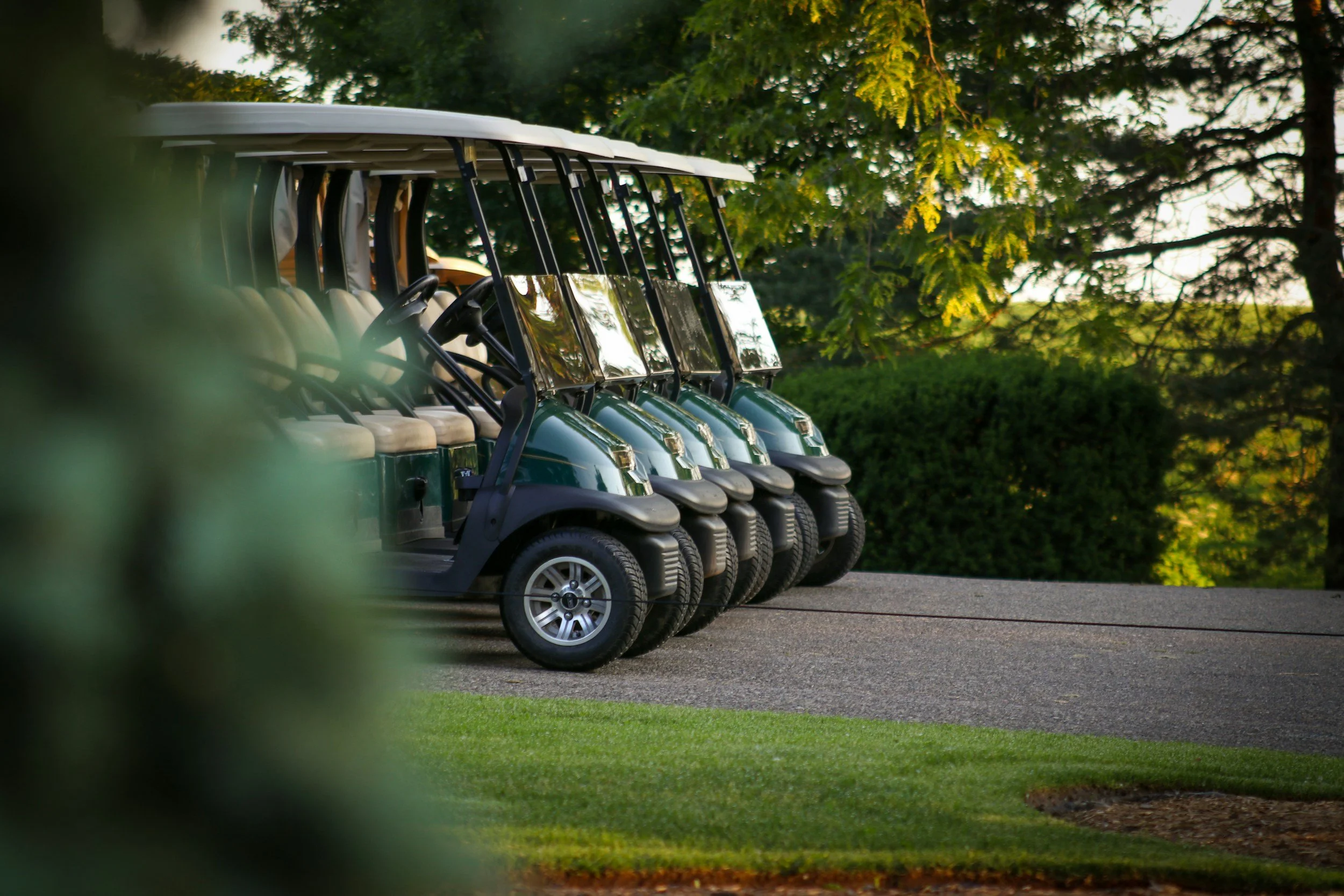
How Much Does a Golf Cart Weigh?
There is a certain kind of golfer who wants to know a cart’s weight only when a trailer starts to sag. Another learns to care when the garage floor seems less theoretical than it once did. A third does not think about it at all until the day a battery pack needs replacing, a lift kit gets added, or a towing setup suddenly feels like a math problem. However you arrive at the question, it is a good one. Golf carts may look light and simple, but they are heavier than many first-time owners expect, and that weight matters more than people think.
The practical answer is this: most golf carts land somewhere in a broad range from about 600 to 1,200 pounds, with many common two-passenger models falling roughly in the 650- to 1,000-pound zone before you start adding passengers, bags, accessories, or cargo. Manufacturer specifications show how much that can vary. Some personal two-passenger models are listed around 665 to 675 pounds, while others are closer to 969 to 975 pounds depending on powertrain and battery setup. Larger four-passenger models can push well past 1,000 pounds.
That spread is not random. It comes from the same things that shape so much in golf: build, balance, intent, and what you ask the equipment to do.
The Short Answer
If you just want the quick takeaway, here it is:
Small two-seat golf carts often weigh around 650 to 975 pounds
Four-seat carts often weigh around 800 to 1,185 pounds
Electric carts can be either lighter or heavier than gas carts depending on whether they use lead-acid or lithiumbatteries
Accessories like rear seats, larger tires, enclosures, coolers, cargo boxes, and lift kits can add meaningful weight fast
That is the overview. The better question is not just how much does a golf cart weigh, but why does the number matter?
Why Golf Cart Weight Matters
For some golfers, the answer is transport. If you are towing a cart on a trailer, loading it into a toy hauler, parking it on a lift, or storing it in a tight garage, weight is not trivia. It is planning.
For others, weight affects how the cart feels and performs. Heavier carts can influence acceleration, braking distance, battery demand, tire wear, and how a cart behaves on hills or soft ground. More weight can also change how much strain you place on a trailer, ramps, flooring, and suspension components over time.
And for golfers who use a cart both on and off the course, the issue becomes even more practical. Add two adults, golf bags, a cooler, and a few accessories, and the real-world total becomes very different from the factory spec sheet.
Related: How Old Do You Have to Be to Drive a Golf Cart?
What Counts in a Golf Cart’s Weight?
This is where people get tripped up. Not every published number means the same thing.
You will often see terms like:
Dry weight: the cart without certain fluids or, in some cases, without batteries.
Curb weight: the cart as it sits ready to operate, typically including batteries or fuel depending on the setup.
Payload or load capacity: how much additional passenger and cargo weight the cart is designed to carry safely.
That distinction matters. One manufacturer may list a dry weight around 669 pounds and a curb weight around 969 pounds for the same general model, which tells you right away how much the battery system contributes.
So when comparing carts, do not compare one cart’s dry weight to another cart’s curb weight and assume you are getting a fair apples-to-apples answer. Golf, after all, punishes bad comparisons.
Electric vs. Gas: Which Weighs More?
This is where the answer gets interesting.
Many golfers assume electric carts are always heavier because of the battery pack. Often, that is true with traditional lead-acid batteries. But lithium-powered carts can come in lighter than some gas models. Manufacturer specs show examples of two-passenger models where a lithium version is around 665 pounds, while gas and electric lead-acid versions of similar carts can be heavier. In another lineup, curb weight figures show a gas model around 692 pounds while a 48V electric version is listed around 969 pounds.
So the better rule is this:
Gas carts are often lighter than traditional lead-acid electric carts
Lithium electric carts can be noticeably lighter than lead-acid versions
The exact answer depends on the specific frame, seating configuration, and battery system
For golfers deciding between power systems, this is one more reason to look past the label and into the actual specification sheet.
The Battery Pack Changes Everything
If golf carts have a hidden weight room, it is the battery bay.
A single deep-cycle golf cart battery can weigh roughly 62 to 63 pounds, depending on size and type. A cart running a bank of multiple batteries can therefore add several hundred pounds just from the energy storage system alone. That is why one electric cart may feel surprisingly stout compared with another that looks nearly identical from twenty feet away.
This is also why lithium conversions get so much attention. Reducing battery weight can change total cart weight in a meaningful way, which may help range, responsiveness, and wear on certain components. It is not magic. It is arithmetic with consequences.
Two-Seaters, Four-Seaters, and Beyond
As with clubs, more options usually mean more mass.
A standard two-passenger cart is usually the lightest and simplest version. Many fall into the range most golfers expect: manageable, compact, and easier to transport.
Move to a four-passenger cart, and the number climbs. Manufacturer specs show four-passenger curb weights ranging from about 794 pounds to 1,125 pounds depending on engine type, battery system, and whether the cart is lifted. Other four-passenger models are listed around 915 to 1,185 pounds.
That matters if you are thinking about:
towing with a lighter vehicle
crossing softer turf
storing on a residential lift
hauling on a trailer with a tight capacity limit
moving the cart manually when it is not powered
A four-seat cart is not simply a longer version of a two-seat cart. It is a heavier, more demanding machine.
Accessories Add Up Faster Than You Think
Golfers love customization. A rear seat here, bigger wheels there, maybe a cargo deck, enclosure, brush guard, stereo, cooler, or upgraded roof. Each individual add-on may seem modest. Together, they can transform a cart’s real-world weight.
Published accessory specs show rear seat kits in the neighborhood of 90 to 120 pounds by themselves. That is before passengers sit on them.
This is the part many people miss. They buy a cart based on a base spec, then slowly turn it into something else entirely. It is a little like buying a set of blades because they looked handsome in the shop and only later remembering that performance is a longer conversation.
Lifted Carts Usually Weigh More
Lifted carts are popular for good reason. They offer more clearance, a more aggressive look, and in some settings a more versatile ride. But lifts, larger tires, upgraded wheels, and associated hardware typically add weight. Manufacturer specs reflect that lifted versions often weigh more than their non-lifted counterparts.
That does not make them a bad choice. It simply makes them a choice with consequences, especially if you are balancing aesthetics, transport, and efficiency.
How Much Weight Can a Golf Cart Carry?
This is different from how much the cart itself weighs.
Many manufacturer specs list load capacities around 500 to 800 pounds, depending on the model. That payload generally includes passengers, bags, and other cargo. It is not a license to test your friendships or your suspension. It is a safety number worth respecting.
A cart may look sturdy enough to carry more. That does not mean it should.
A Good Rule of Thumb for Golfers and Buyers
If you are trying to estimate quickly without a specific model in front of you, this is a useful guideline:
Basic two-seat gas cart: roughly 650 to 750 pounds
Basic two-seat electric cart with lead-acid batteries: roughly 900 to 1,000 pounds
Two-seat lithium cart: often lighter than lead-acid versions, sometimes closer to the mid-600s to 700s
Four-seat or lifted cart: often 900 to 1,185 pounds or more
Customized cart with accessories: potentially above those ranges, depending on what has been added
It is a rule of thumb, not gospel. But it is far better than guessing.
Before You Tow or Store One, Check These Three Numbers
Before you hook up a trailer or commit to a garage setup, make sure you know:
The cart’s curb weight
The added weight of accessories and cargo
The rated capacity of your trailer, ramps, storage platform, or towing vehicle
This is where simple planning saves money and embarrassment. A cart that looks harmless sitting under a roof can become a serious load once fully equipped.
Final Thoughts
A golf cart’s weight is one of those details that seems small until it becomes practical, and then suddenly it matters all at once. For the beginner, it is useful knowledge. For the seasoned player, it is part of owning the game’s equipment wisely. And for anyone buying, storing, customizing, or towing a cart, it is one of the first numbers worth knowing.
The honest answer to how much does a golf cart weigh is not one number. It is a range shaped by batteries, seating, accessories, and purpose. Still, if you remember nothing else, remember this: most golf carts weigh more than they look, and the details on the spec sheet deserve the same respect as the yardage book.
FAQs About Golf Cart Weight
1. What is the average weight of a golf cart?
Most golf carts weigh somewhere between 600 and 1,200 pounds, with many standard two-passenger carts falling roughly in the 650- to 1,000-pound range depending on whether they are gas, lead-acid electric, or lithium electric.
2. Do electric golf carts weigh more than gas golf carts?
Often they do, especially when electric carts use traditional lead-acid batteries. However, lithium-powered electric carts can be lighter than some gas models, so the battery type matters just as much as the power source.
3. How much do golf cart batteries weigh?
A single deep-cycle golf cart battery can weigh around 62 to 63 pounds, and a full battery pack can add several hundred pounds to the cart’s total weight.
4. What is the difference between dry weight and curb weight?
Dry weight usually refers to the cart without certain operating components, while curb weight generally means the cart is ready to run with its normal power source installed. This is an important distinction when comparing models.
5. How much does a four-passenger golf cart weigh?
A four-passenger golf cart often weighs more than a two-passenger model, with many examples ranging from about 794 pounds to 1,185 pounds depending on configuration, powertrain, and whether the cart is lifted.
6. Do golf cart accessories increase total weight?
Yes. Rear seats, cargo decks, larger tires, lift kits, enclosures, and other accessories can all increase total cart weight. Some rear seat kits alone are listed around 90 to 120 pounds.
7. Why does golf cart weight matter?
Weight matters for towing, trailer safety, storage, braking, tire wear, battery demand, hill performance, and total load planning. A cart’s actual weight affects more than transportation; it also changes how the vehicle behaves in everyday use.
8. How much weight can a golf cart carry safely?
Many golf carts list payload capacities around 500 to 800 pounds, but the safe number depends on the model and setup. Always check the manufacturer’s specifications before loading passengers, golf bags, or cargo.
9. Are lifted golf carts heavier?
Usually, yes. Lifted carts often include added hardware, larger tires, and other components that increase overall weight compared with non-lifted versions of similar models.
10. What should I check before towing a golf cart?
Check the cart’s curb weight, your accessory and cargo weight, and the rated capacity of your trailer, ramps, and towing vehicle. Those three numbers tell the real story.
External Sources
Recent Writings