How Fast Can a Golf Cart Go?
If you are new to golf, it is a fair question. A golf cart can feel quick when you are rolling down a path with clubs on the back, the wind moving through the trees, and a tee time waiting ahead. But the real answer depends on what kind of cart you are talking about.
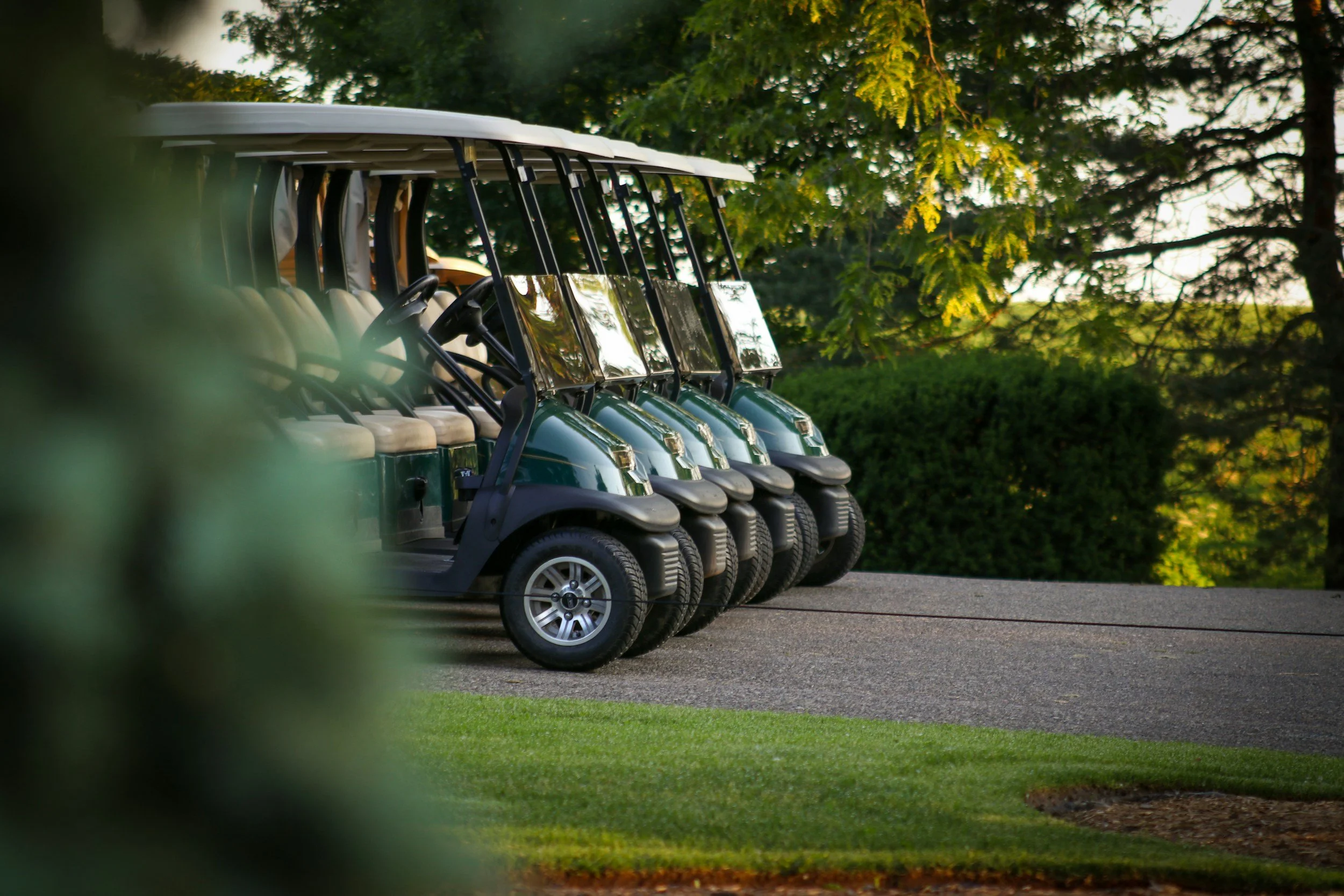
Most standard golf carts used for golf-course play typically run in the 12 to 15 mph range. Some personal transportation models are built to go up to around 19 mph, while street-legal low-speed vehicles are generally designed to travel between 20 and 25 mph under applicable rules and equipment standards.
That is why the better question is not just how fast can a golf cart go, but what kind of golf cart are you driving, where are you using it, and what is it designed to do?
The Short Answer
For most golfers, the answer looks like this:
Standard on-course golf carts: usually about 12 to 15 mph
Personal transportation golf carts: often up to 19 mph
Street-legal low-speed vehicles: typically 20 to 25 mph
That spread matters. A cart built for navigating a golf course is not always the same thing as one designed for neighborhood transportation.
Why Golf Cart Speed Varies
Golf cart speed depends on more than the badge on the front. Several factors shape how fast a cart feels and how fast it actually goes.
1. The Cart’s Intended Use
A fleet cart meant for daily course rounds is usually set up for steady, controlled speed. That makes sense. On a golf course, the goal is safe, smooth transportation between shots, not racing from tee to green.
Personal-use models are often tuned differently. They may be designed for neighborhoods, private property, or mixed recreational use, so they can run faster than typical course fleet carts. Club Car, for example, lists many personal transportation vehicles at up to 19 mph, while low-speed vehicles are treated separately.
2. Whether It Is a Golf Cart or an LSV
This is where many golfers get tripped up.
A traditional golf cart is generally meant for course or private-property use. A low-speed vehicle, often shortened to LSV, is a different category with different rules. Under federal guidance, an LSV is a four-wheeled motor vehicle with an attainable speed of more than 20 mph but not more than 25 mph on a paved level surface.
In plain English, that means a cart-like vehicle that goes 25 mph may not really be operating as a basic golf cart anymore. It may fall into a different class altogether.
3. Electric vs. Gas Power
Both electric and gas carts can deliver perfectly usable speed for golfers, but the feel can be different.
Electric carts tend to deliver smooth, immediate torque. They feel quiet and responsive, which many golfers prefer during a round. Gas carts can feel more traditional and may have a different acceleration profile. But in either case, the actual top speed is still determined by how the cart is configured, governed, and intended to be used. Manufacturer setup matters more than fuel type alone.
4. Terrain, Load, and Battery Condition
A golf cart with two passengers, a pair of full golf bags, and a hilly cart path will not perform the same way as an empty cart on a flat stretch of pavement.
Speed can be influenced by:
passenger and cargo weight
incline and terrain
tire size and condition
battery charge and battery health
controller settings and factory programming
That is one reason the number on paper is only part of the story. Real-world speed is often situational.
How Fast Is Fast Enough for Golf?
For golf, you do not need much more than a steady, dependable pace.
A cart is there to help pace of play, conserve energy when needed, and move golfers and equipment efficiently. On a busy course, too much speed is not a feature. It is a liability. Many operators and safety programs emphasize moderate operation, careful turning, and adjusting speed for terrain and traffic conditions.
That is why many standard golf-course carts stay in that familiar 12-to-15-mph neighborhood. It is quick enough to keep a round moving, but controlled enough to fit the rhythms of the game.
Can a Golf Cart Go Faster Than 25 mph?
Some modified carts can exceed 25 mph, but once you move into that territory, you are no longer talking about the kind of speed most golfers need for ordinary course use. More speed also changes braking demands, stability, handling, and legal classification.
Even manufacturer and safety guidance warns against modifications that increase speed beyond factory specifications in ways that affect vehicle control or stopping distance.
For most golfers, the smarter move is not asking how to make a cart faster. It is asking whether the cart is safe, stable, and appropriate for where it is being driven.
Does Golf Cart Speed Matter to Your Game?
In one sense, not really. No one is shooting lower scores because the cart picked up an extra 3 mph between holes.
But speed does matter in practical ways.
A cart that is too slow can drag down pace of play on long transitions. A cart that is too fast can feel jerky, unstable, or unsafe, especially for inexperienced drivers. The sweet spot is a cart that moves briskly, stops predictably, and feels calm under normal course conditions.
For beginners, that means confidence. For experienced players, it means convenience without distraction.
The Best Way to Think About Golf Cart Speed
A good golf cart should feel like a useful companion to the round, not the main event.
It should get you to your ball without fuss. It should handle the path smoothly. It should not make sharp turns feel sketchy or downhill stretches feel longer than they need to. And above all, it should match the setting.
That is the real answer to the speed question. Golf carts are not all built for the same job. Some are made for golf. Some are made for neighborhoods. Some are built to meet low-speed vehicle requirements. Put them all in one bucket, and the numbers get muddy fast.
But if you are talking about the carts most golfers actually use on the course, 12 to 15 mph is the normal range, with faster personal-use and street-legal models going beyond that depending on design and classification.
Final Thoughts
So, how fast can a golf cart go?
For the average golfer, the answer is usually fast enough to keep the round moving, but not so fast that it changes the nature of the ride. Standard course carts generally live in the low-to-mid teens. Personal-use carts can stretch toward 19 mph. Street-legal low-speed vehicles top out in the 20-to-25-mph window.
That may not sound dramatic, but on a golf course, it does not need to be. Golf has always had room for a little motion, so long as it does not disturb the larger point of the day: getting around the course comfortably and getting back to the next shot.
FAQs
What is the average speed of a golf cart?
Most standard golf carts used on golf courses typically travel around 12 to 15 mph, though some personal-use models are configured to go faster.
How fast can a street-legal golf cart go?
Street-legal low-speed vehicles are generally designed to travel more than 20 mph but not more than 25 mph under federal low-speed vehicle standards.
Is a golf cart the same as an LSV?
Not always. A traditional golf cart and a low-speed vehicle are often treated differently. An LSV falls into a specific category with different speed capability and safety requirements.
Are electric golf carts faster than gas golf carts?
Not necessarily. Speed depends more on the cart’s configuration, governor settings, controller programming, and intended use than on power source alone.
Can you make a golf cart go faster?
Some carts can be modified, but increasing speed can affect braking, stability, safety, and legality. Manufacturer guidance warns against modifications that compromise control or stopping distance.
Why do golf-course carts usually seem slower?
Because they are built for controlled operation on cart paths, around other players, and across varied terrain. The goal is safe transportation during a round, not maximum speed.
Does terrain affect golf cart speed?
Yes. Hills, rougher ground, passenger weight, golf bags, battery condition, and tire setup can all change how fast a golf cart performs in real conditions.
What speed is best for golf?
For most golfers, the best speed is one that keeps play moving while still feeling stable and predictable. On a course, smooth and safe almost always beats fast.
Recent Writings