Callaway HX Practice Golf Balls Review
There is a certain kind of golf purchase that does not promise miracles. It does not claim to add twenty yards. It does not arrive wrapped in tour language. It simply helps you hit more golf shots, more often, with less ceremony and less risk to your windows, your siding, your neighbor’s patience, and your own tendency to overcomplicate things.
That is where the Callaway HX Practice Golf Balls live.
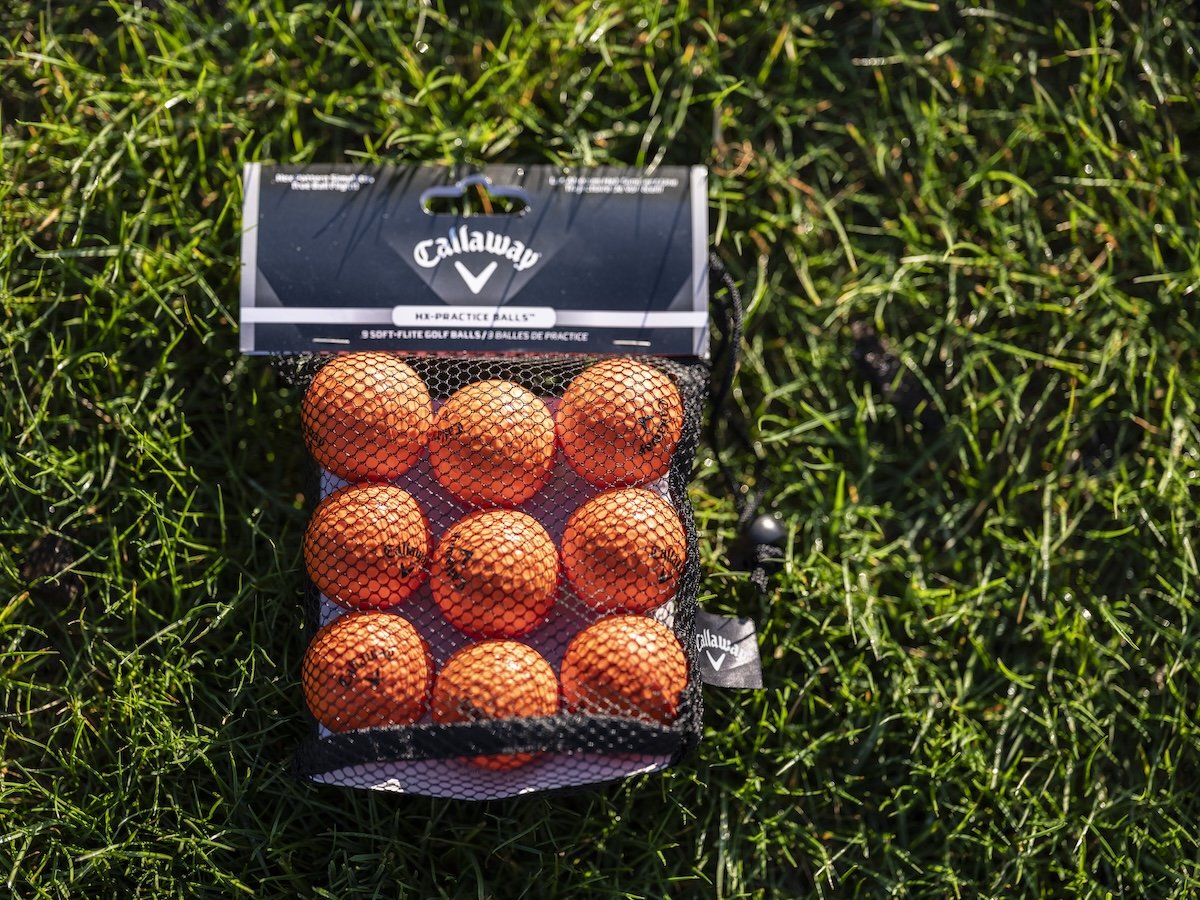
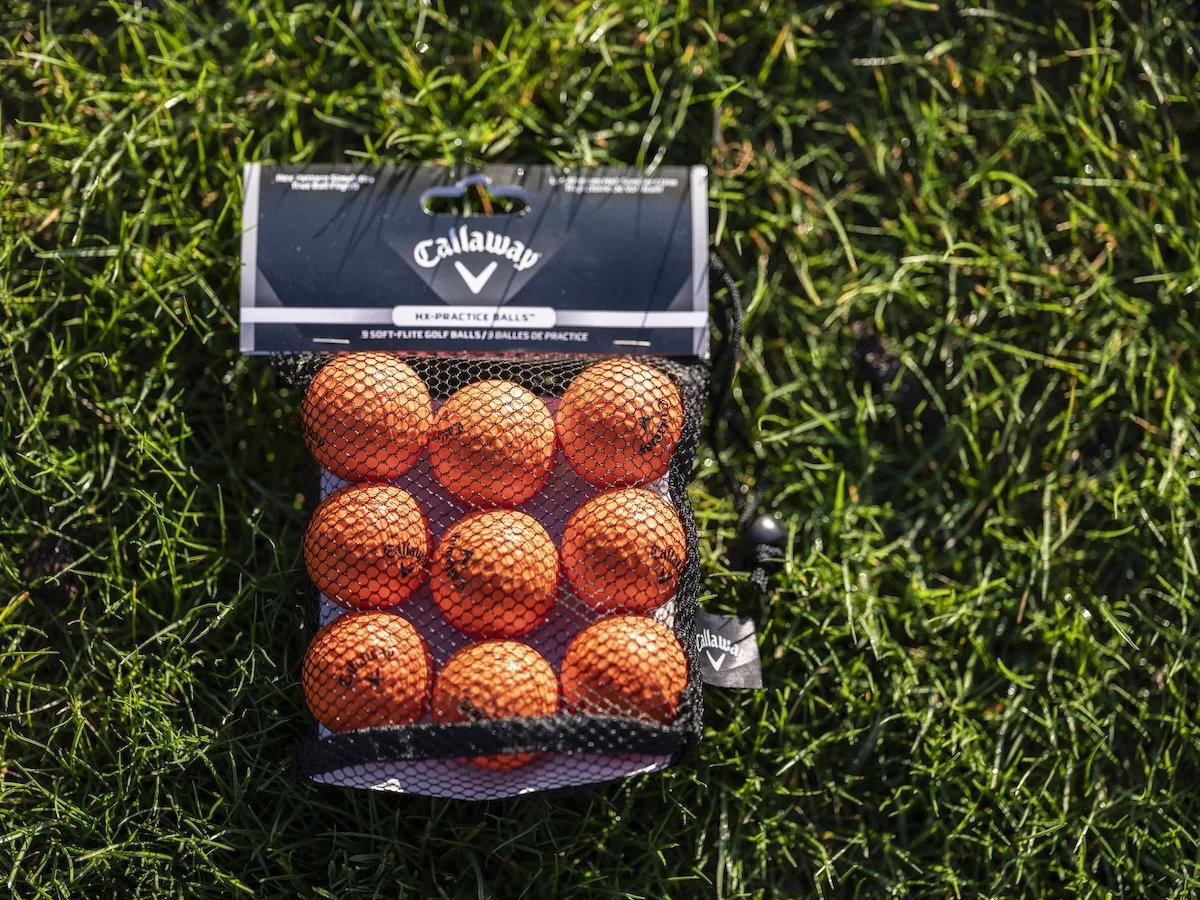
These are soft-flight foam practice balls built to simulate real ball flight at reduced distances. Callaway says they are made from durable foam, use the company’s HEX dimple pattern, and are meant to produce scaled-down flight while coming with a mesh carry bag. On the DICK’S Sporting Goods listing, the 9-pack is priced at $14.99 and carries a strong customer rating with high recommendation marks.
That tells you most of what you need to know. But golf, as ever, asks for a little more than product copy. The real question is not what these balls are. The real question is whether they are useful. And on that score, the answer is yes.
First Impressions
The appeal of a practice ball like this is simple: it lowers the friction between wanting to practice and actually practicing.
A lot of golfers, especially beginners, do not need another complicated training aid. They need a way to make ten swings in the yard before dinner. They need to rehearse a pitching motion without driving to the range. They need to see some flight, get some feedback, and build a little rhythm. These balls are built for that kind of session.
Callaway’s own description says the balls are designed to simulate actual ball flight at reduced distances, and that matters because many low-end plastic practice balls behave like small lottery tickets in the wind. These foam balls aim for something closer to golf. Not real golf, exactly, but golf’s cousin.
What the Callaway HX Practice Golf Balls Are
Here is the practical version:
They are foam practice golf balls
They are designed for reduced-distance flight
They feature Callaway’s HEX dimple pattern
They come in a mesh carry bag
The DICK’S version the user referenced is a 9-pack
Those details matter because they shape expectations.
These are not putting-room marshmallows that fall two feet off the clubface. They are not range balls. They are not limited-flight balls meant for a full-size range setup. They are the middle ground: soft enough to make home practice safer, structured enough to give you a recognizable launch and curve pattern. That is a useful category.
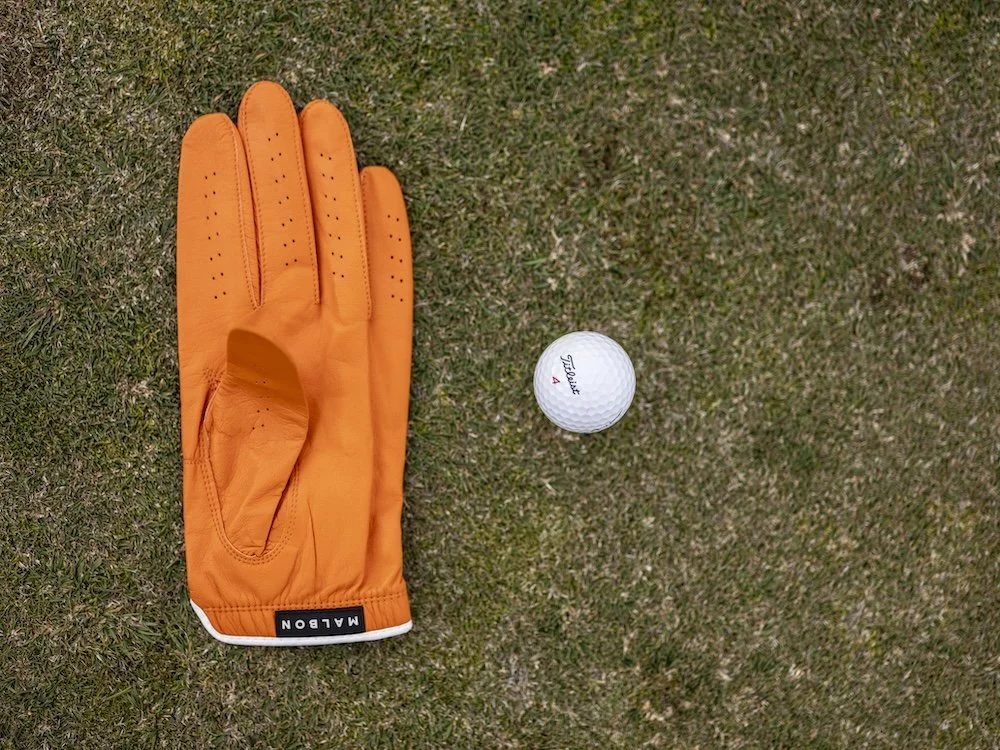
Related: Malbon Palmera Glove Marmelade Review
Performance: What They Actually Help You Practice
1. Short-game rhythm
This may be their best use.
For chipping and little pitch shots, the HX Practice Balls make a lot of sense. Retailer review summaries mention customers using them for chipping, pitching, and full-swing practice, and that tracks with the design.
If you are a beginner, these balls can teach you something important: the club does not need to lash at the ball. A crisp little motion, some chest rotation, and a stable bottom of the swing go a long way. Because the consequence is smaller and the flight shorter, many new golfers swing with less panic. That usually leads to better motion.
If you are a more experienced player, these balls are useful for contact drills, low-point control, and distance-window rehearsals in tight spaces. You are not measuring exact carry numbers. You are checking strike quality and face control.
2. Backyard wedge work
This is another good lane for them.
A lot of golfers want to practice wedges but do not have the time or patience to visit a range for twenty minutes of half-swings. Foam balls let you rehearse takeaway, transition, and strike pattern at home. Since these are designed to fly shorter than a real ball, you can work on technique in a more controlled setting.
One reviewer on DICK’S noted they fly “a little further” than expected but still fairly true, and another review summary highlighted that they can work well in the yard without the worry of breaking windows. That is probably the correct expectation to bring: safer, not harmless; reduced, not tiny.
3. Full-swing rehearsal
Yes, but with a small asterisk.
Can you make full swings with them? Yes. Should you treat the result like a launch monitor session? Absolutely not.
These balls are designed to simulate flight, not duplicate a premium golf ball. They can show general start line, shape, and quality of strike. They are useful for rhythm and sequencing. They are less useful for exact distance gapping, spin behavior, or testing whether your 7-iron is going 162 or 166.
A seasoned golfer will understand the distinction. A beginner may need to hear it plainly: these balls are for motion practice with feedback, not for precision ball-data practice.
How They Feel
Foam practice balls live or die by the answer to one question: do they feel silly?
The Callaway HX balls appear to avoid most of that problem. Because they are built as soft-flight foam balls with a dimple pattern meant to stabilize flight, they land closer to “useful training tool” than “toy from the garage shelf.”
No, they do not feel like a urethane-covered tour ball. Of course they do not. But they do appear to offer enough structure to give a golfer a believable strike sensation and a readable launch. That is usually all you need from this category.
Who Should Buy Them
Beginners
Very good fit.
If you are new to golf, the hardest thing is often just getting repetitions without stress. These balls make it easier to build a habit. They are approachable, forgiving to the environment around you, and useful for basic contact and trajectory work.
Intermediate golfers
Also a good fit.
If you already play a bit, these become a handy in-between tool for home sessions, especially on days when you want to sharpen wedge feels or rehearse mechanics without hitting a bucket.
Low handicaps and serious players
Still useful, if used correctly.
Better players often dismiss simple tools because they are simple. That is a mistake. Home practice balls can be excellent for rehearsing delivery patterns, face control, and tempo. They just should not be mistaken for full ball-flight analysis.
Parents and families
Strong fit.
Because they are soft-flight foam balls and sold in a compact 9-pack with a mesh bag, they are easy to store, transport, and use in casual family practice.
What I Like
They remove excuses
This is the big one. You do not need a range session, a perfect practice plan, or much setup. You can simply go hit some shots.
They offer real-enough feedback
The HEX dimple pattern and reduced-flight design suggest a more stable, golf-like flight than bargain-bin alternatives.
They are portable
The included mesh carry bag is a small detail, but golf lives on small details. A product that is easier to carry is a product you are more likely to use.
The value is reasonable
At $14.99 for the 9-pack on DICK’S, they sit in a practical impulse-buy range for golfers who want a home practice option without buying a larger net or mat setup first.
What to Keep in Mind
They are not silent
Foam helps, but impact still makes noise. If you are planning to stripe 50 wedge shots beside a sleeping child or a cranky next-door neighbor, maybe proceed with some diplomacy.
They are not zero-risk
Reduced flight is not no flight. Reviewers note they can travel farther than expected when struck well.
They are not a substitute for real-ball practice
Eventually, golf asks you to hit real golf balls. These are a bridge, not the whole road.
The Real Value of This Product
The best golf products are often the ones that encourage a healthier relationship with practice.
The Callaway HX Practice Golf Balls are not glamorous. They are not trying to be. Their value is that they make golf more available. Five swings here. Ten chips there. A few half-wedges in the yard. A child learning what loft looks like. A 12-handicap trying to own his transition. A scratch player rehearsing start lines without leaving home.
That is useful golf.
And useful golf equipment tends to last in the bag, or in the trunk, or in the little corner of the garage where hope and half-finished swing thoughts go to live.
Final Verdict
The Callaway HX Practice Golf Balls are a smart, worthwhile buy for golfers who want convenient at-home practice with more realistic flight than a throwaway practice ball.
They are especially good for:
Chipping and pitching practice
Backyard wedge rehearsals
Beginner confidence-building
Home swing work with reduced risk
Golfers who want more reps without making practice a production
They are less ideal for:
Exact distance testing
Spin analysis
Full replacement of range sessions
Overall rating: 4.5/5
They do what a good practice product should do: they make it easier to work on your golf swing today instead of promising you some future version of yourself you may never quite meet.
FAQs
Are the Callaway HX Practice Golf Balls good for beginners?
Yes. They are especially good for beginners because they make it easier to practice contact, launch, and short-game motion at home without the intimidation or risk that comes with hitting full real golf balls.
Can you use the Callaway HX Practice Golf Balls indoors?
You can, depending on your space, ceiling height, and surroundings. They are designed for reduced-distance flight, but they can still move with some pace when struck well, so indoor use should be limited to safe, controlled environments.
Do the Callaway HX Practice Golf Balls feel like real golf balls?
Not exactly. They are foam practice balls, so they will not duplicate the compression or sound of a real premium golf ball. What they do provide is a more believable strike and flight pattern than many basic practice balls.
Are these practice balls good for chipping?
Yes. Chipping is one of their best use cases. They are helpful for learning clean contact, trajectory control, and rhythm around the house or in the yard.
Can you make full swings with the Callaway HX Practice Golf Balls?
Yes, but they are best used for swing rehearsal and general ball-flight feedback rather than exact distance measurement. They are designed to simulate flight at reduced distances.
Do they come with a bag?
Yes. Callaway lists these balls as including a mesh carry bag, which makes them easier to store and transport.
How many balls come in the pack?
The DICK’S Sporting Goods product referenced here is a 9-pack. Other sellers also list additional count options, but the linked version is the 9-pack.
Are the Callaway HX Practice Golf Balls worth it?
For most golfers, yes. If your goal is convenient home practice, especially for short game and swing rehearsal, they offer a good balance of realism, safety, portability, and value.