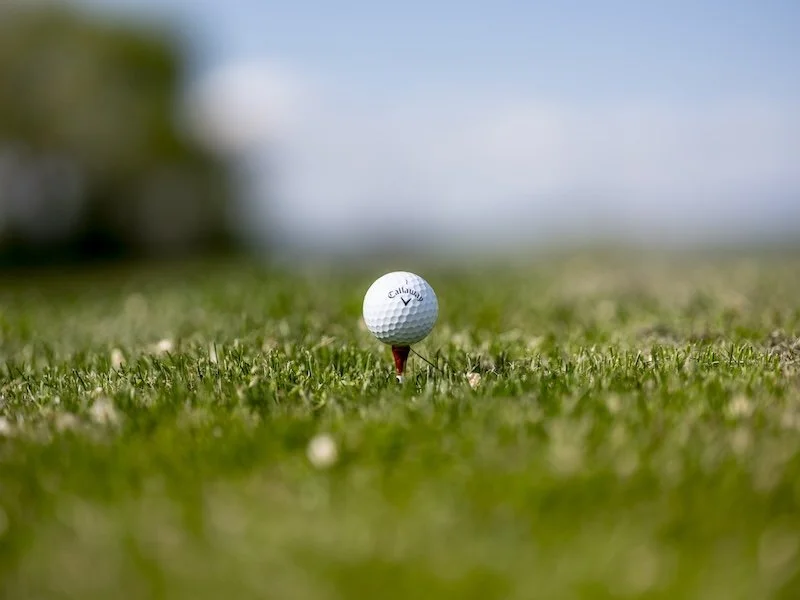
How Big Is a Golf Ball?
It is one of those questions that sounds small until you put a club behind the thing.
A golf ball sits there with the composure of a marble and the consequences of a wager. It is compact enough to disappear in rough, small enough to rattle around in a cup, and yet important enough that the game’s governing bodies have measured it to the fraction. For the beginner, that may seem like trivia. For the experienced player, it is part of the deeper architecture of the game: the reason one ball flies the way it does, why another holds its line in the wind, and why conformity matters before the first tee shot is ever struck.
So, how big is a golf ball?
A conforming golf ball must be at least 1.680 inches in diameter, which is 42.67 millimeters. It also must weigh no more than 1.620 ounces, or 45.93 grams. Those are not guesses, traditions, or locker-room approximations. They are equipment standards written into the rules of the game.
That means the modern golf ball is small, but not arbitrary. It has a minimum size, a maximum weight, and a long history behind both.
The Simple Answer
If you want the plain-English version, here it is:
Minimum diameter: 1.680 inches / 42.67 mm
Maximum weight: 1.620 ounces / 45.93 g
Shape: It must conform to standards for roundness and overall performance under the Equipment Rules.
For most golfers, that is enough. But if you have ever wondered why golf balls feel so different, or why they can look nearly identical while producing very different flights, the real story begins after the ruler leaves the room.
Related: What is a Grand Slam in Golf?
Why Golf Ball Size Matters
A golf ball is not large. Everybody knows that. What is easier to forget is just how much work that little object has to do.
It must launch off the clubface at high speed, survive the violence of impact, rise through air, fight drag, use dimples to manage lift, land on turf, react to spin, and then roll with some sense of order toward a target that often looks impossibly far away. The ball is small because the game was shaped around that difficulty. And yet its size cannot be too small, because then performance begins to move beyond the intended boundaries of skill and equipment. That is why the minimum diameter rule exists.
The dimples matter, too. The governing bodies and research materials from the game’s equipment world explain that dimples reduce drag and help the ball travel farther and more efficiently through the air. So when golfers talk about ball flight, they are not just talking about swing mechanics. They are talking about physics wrapped around a sphere that has been engineered to within a whisper of the rulebook.
Is There a Maximum Size for a Golf Ball?
This surprises some golfers: under the equipment rules, there is no maximum diameter for a conforming golf ball, as long as it still meets the other standards. The rule sets a minimum size, not a ceiling.
In practice, nearly all balls you see for normal play cluster around the standard size consumers expect. Manufacturers are not out there making oversized novelty missiles for tournament golf. Still, it is useful to understand the distinction. The rules do not say, “A golf ball must be exactly this big.” They say it must be at least this big.
That is a small difference in wording and a meaningful one in equipment language.
How Big Does a Golf Ball Look in Real Life?
Measurements are nice. Feel is better.
A golf ball is roughly:
a little smaller than many people imagine when they first start playing,
small enough to make centered contact difficult,
large enough to invite false confidence on the tee,
and exact enough that a tiny change in strike location can send it curving into trouble.
For beginners, this is an important mental adjustment. You are not trying to smash a big target. You are trying to deliver the clubface squarely to a very small one. That reality explains a lot about why the game feels hard at first.
For better players, the size of the golf ball is part of why precision becomes addictive. The margin between a flushed shot and a glancing one is thin. A ball of this size rewards control without ever giving away too much mercy.
Why Golf Ball Weight Matters Just as Much
Size gets the headline, but weight deserves a place in the conversation.
A conforming golf ball cannot weigh more than 1.620 ounces (45.93 grams). There is no minimum weight requirement in the same way there is a minimum size requirement, but there is a firm upper limit.
That cap matters because weight influences speed, flight, and overall performance. The rules exist to keep the ball from becoming an equipment shortcut. The game wants skill to matter more than engineering excess. That is the broad spirit behind the Equipment Rules, which are designed to define what golf equipment should be and to limit how it performs.
Why All Golf Balls Are Not the Same if the Size Is Standard
This is where new golfers often get tripped up.
If golf balls are basically the same size, why do they not all perform the same?
Because size is only one part of the story. Construction, compression, cover material, dimple pattern, spin profile, and launch characteristics all affect performance. Even official conforming-ball documentation notes that manufacturers provide details such as construction, spin rating, and dimple count for listed models.
So yes, the ball is standard in the ways the rules require. But within those boundaries, manufacturers still have room to create products for different players and different preferences. One golfer wants softer feel around the greens. Another wants lower spin off the driver. Another wants durability above all else. The dimensions are governed. The personality is not.
A Brief Note on History
Golf did not always live under one universal ball size standard. Historical material from the governing bodies notes that the smaller ball remained in use under some conditions for years, and the modern larger standard became fully universal only later. The larger 1.68-inch ball became mandatory in one major championship in 1974, while the smaller ball was not fully outlawed under those rules until 1990.
That bit of history matters because it reminds us that golf’s equipment standards were not handed down all at once. They were negotiated over time, usually in response to the same tension the game always carries: tradition on one side, performance on the other.
What This Means for Beginners
If you are just learning the game, here is the practical takeaway:
The golf ball is small enough that clean contact will take time. That is normal. You do not need to fear the size of it, but you do need to respect it. The ball asks for balance, rhythm, and repetition. It does not ask for violence.
Beginners are often better served by thinking less about raw size and more about these questions:
Can I return the clubface to the ball consistently?
Am I watching the back of the ball through impact?
Am I using a ball suited to my swing speed and budget?
Am I practicing contact before worrying about shaping shots?
The golf ball’s dimensions are fixed. Your relationship with it is not. That improves with every bucket, every round, every oddly satisfying shot that rises into the air and makes you believe this game might love you back after all.
What This Means for Skilled Players
For experienced golfers, the size of the golf ball is less a curiosity than a constraint worth appreciating.
A ball this small, this governed, and this aerodynamically refined places a premium on strike quality, spin control, trajectory management, and equipment fit. Skilled players know that the ball is not just an object to be hit. It is a partner in decision-making. Club selection changes with wind. Spin loft matters. Cover softness matters. Dimple design matters. The ball’s standardized size is the constant; the artistry comes from everything built around it.
That is one reason golf remains interesting across generations of players. The object is humble. The variables are endless.
Final Thoughts
So how big is a golf ball?
Big enough to govern. Small enough to haunt you.
Officially, it must be at least 1.680 inches (42.67 mm) in diameter and no more than 1.620 ounces (45.93 grams) in weight.
But the better answer is this: a golf ball is exactly as big as the game needs it to be. Large enough to reward a skilled strike. Small enough to punish carelessness. Simple enough to fit in your palm. Complex enough to occupy a lifetime.
And that, in its own way, is golf.
FAQs About Golf Ball Size
1. What is the official size of a golf ball?
A conforming golf ball must have a diameter of at least 1.680 inches, which equals 42.67 millimeters.
2. How much does a golf ball weigh?
A conforming golf ball must weigh no more than 1.620 ounces, or 45.93 grams.
3. Are all golf balls the same size?
Conforming golf balls must meet the same minimum size requirement, but performance can still vary based on construction, cover material, compression, and dimple pattern.
4. Is there a maximum size for a golf ball?
Under the Equipment Rules, there is no maximum diameter, provided the ball conforms to all other standards.
5. Why are golf balls covered in dimples?
Dimples help reduce drag and improve the ball’s aerodynamic performance, allowing it to fly farther and more efficiently than a smooth ball would.
6. Can a golf ball be too heavy for tournament play?
Yes. If a ball exceeds the maximum permitted weight, it would not conform to the Equipment Rules and would not be legal for conforming play.
7. Were golf balls always this size?
No. Historical equipment materials show that smaller golf balls were once allowed under some rule systems before the modern larger standard became universal.
8. Does golf ball size affect performance?
Yes. Size is one factor in how a ball moves through the air and performs under the rules, though construction and dimple design also play major roles.
9. Do beginners need a different size golf ball?
No. Beginners use the same conforming size as everyone else. What usually changes is the type of ball they choose, such as one designed for durability, value, or a softer feel. Conforming-ball listings show that ball models differ by construction and performance traits, not by legal minimum size.
10. Why does the golf ball feel so small when learning to play?
Because it is small relative to the demands of the swing. Clean contact requires timing, balance, and face control, which is why the game feels difficult early on. That challenge is part of the sport’s design, not a sign that you are failing.
External Sources
Recent Writings